
Searching for a supportive housing program for a vulnerable adult is not like searching for an apartment. You are not just looking for available space at the right price. You are looking for an environment that will actively support someone’s recovery, stability, and growth during one of the most critical periods of their life. Get it right and the placement becomes a turning point. Get it wrong and another opportunity for genuine change slips away.
The challenge is that supportive housing programs vary enormously in quality, model, and capacity. Some programs deliver exactly what their name implies. Others use the right language without the substance behind it. And without knowing what to look for, it is genuinely difficult to tell the difference from the outside.
This guide gives you a practical, specific framework for evaluating any supportive housing program. Every criterion here applies directly to what Hazel’s Tranquility Place provides across our three Solano County facilities. But more importantly, these are the standards that any quality program should meet. Use this guide to evaluate any program you are considering, including ours.
Call Now: 707-301-4051
Start With the Basics: What the Program Actually Provides
Before anything else, get a clear picture of what the program actually includes. Not what the website says in general terms. What specifically happens inside the program every day.
Ask these questions directly:
What does a typical day look like for a resident?
A quality supportive housing program has a structured daily schedule that it can describe specifically. Mealtimes, programming blocks, individual check-ins, curfew. If the answer is vague or the program cannot describe a typical day with any specificity, that tells you something important about the level of structure actually in place.
At Hazel’s Tranquility Place, every day follows a consistent schedule that includes set mealtimes, structured programming, personal development time, and curfew. Our staff can describe that schedule clearly because it exists and they follow it every single day.
What support services are integrated into the residential experience?
Supportive housing is defined by the integration of services into the living environment. A program that simply provides shared housing with light oversight is not genuinely supportive housing in the clinical sense. Look for programs that integrate medication management, behavioral health coordination, life skills development, individualized care planning, and transition planning into the daily fabric of residential life.
How many residents does the program serve and what is the staff-to-resident ratio?
The quality of attention each resident receives depends significantly on how many residents share staff capacity. Ask specifically about staffing levels during daytime hours, evening hours, and overnight. A program that cannot answer this question clearly may be understaffed in ways that affect the quality of support residents receive.
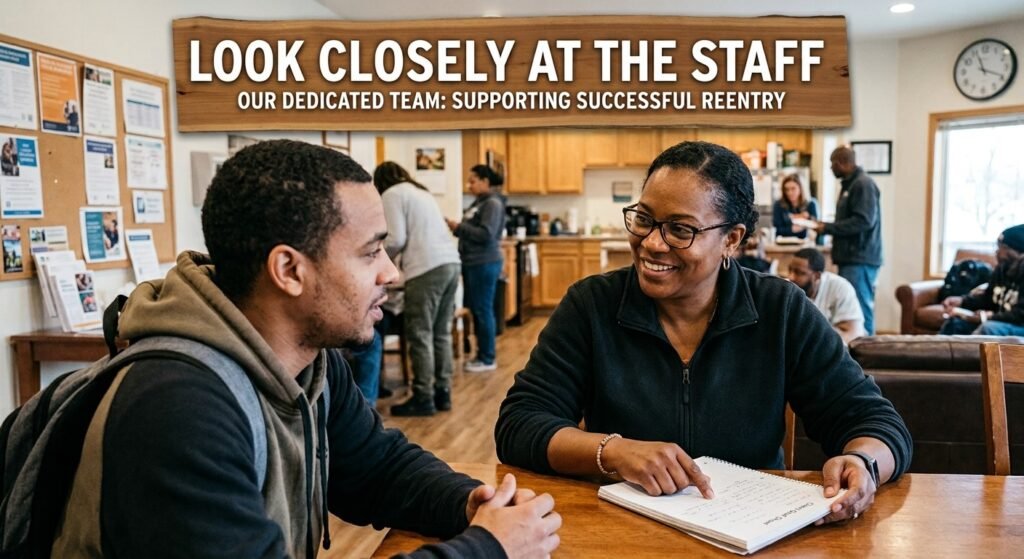
Look Closely at the Staff
This is the section that matters most. More than the facility. This is because, the quality of a supportive housing program is ultimately the quality of the people delivering it. And when we talk about quality in this context, we are not only talking about clinical credentials and professional training. We are talking about something deeper and more personal than that.
The power of lived experience
One of the most important questions you can ask any supportive housing program is whether their staff include people who have personally navigated similar experiences to the residents they serve. Recovery. Reentry. Housing instability. Mental health challenges. Difficult life transitions.
This matters more than most people realize. When a resident walks through the door of a supportive housing program and encounters a staff member who has genuinely been through something similar, something shifts. The dynamic changes. The resident is not talking to someone who learned about their experience in a classroom or read about it in a case file. They are talking to someone who understands from the inside what it feels like to be exactly where they are right now.
That understanding is not teachable. It comes from having lived it. And it creates a quality of trust and connection between staff and residents that formal training alone simply cannot replicate.
Staff with lived experience bring specific things to their work that clinically trained staff without that background cannot always offer:
- They recognize the difference between what a resident says and what they actually mean because they have said the same things themselves
- They can sit with a resident in a hard moment without flinching because they have sat in that same hard moment from the other side
- They model something that no curriculum can teach, the reality that the other side of a crisis is real and reachable and worth working toward
- They reduce shame immediately because their presence communicates that recovery is not a theoretical possibility but a lived reality
- They build trust faster because residents recognize authentic understanding rather than practiced empathy
At Hazel’s Tranquility Place, we understand the value of this deeply. Our approach to supporting residents is shaped not only by professional training but by the recognition that people who have walked through difficult experiences, who have navigated the same systems, faced the same stigma, and found their way through, bring something irreplaceable to this work. That understanding is woven into how we build our team and how we think about what residents actually need from the people around them.
Training in trauma-informed practice
Beyond lived experience, look for programs whose staff receive formal training in trauma-informed care. The majority of adults entering supportive housing carry significant trauma histories. Staff who understand how trauma affects behavior, perception, and the capacity for trust will engage with residents in ways that heal rather than inadvertently retraumatize.
Ask specifically whether staff receive trauma-informed training, how recently, and whether it shapes concrete practices within the program or sits as a philosophical statement without operational expression.
Experience with the specific population you are placing
A program that primarily serves one population may not be equally equipped for another. Ask directly about the program’s experience with the specific needs of the person you are placing. The answer should be specific and grounded in actual practice rather than general assurances.
Staff consistency and turnover
High staff turnover is one of the strongest indicators of a poorly functioning residential program. Residents build trust with specific people and that relational trust is itself therapeutic. When staff turn over constantly, that trust has to be rebuilt repeatedly and never deepens into the kind of genuine relationship that supports real change. Ask about average staff tenure and how the program handles transitions when a key team member leaves.
How staff handle difficult days
Ask directly what happens when a resident is having a hard day behaviorally. A staff team that includes people with lived experience will often describe a response rooted in genuine understanding of what drives difficult behavior. They know what it feels like to be in that state. They respond accordingly. The answer to this question reveals more about a program’s actual culture than almost anything else you can ask.
Call Now: 707-301-4051
Evaluate the Program’s Approach to Accountability
Accountability is one of the most important elements of an effective supportive housing program. But there is a significant difference between accountability that is protective and supportive and accountability that is punitive and counterproductive.
Look for programs that:
- Communicate house expectations clearly and transparently from day one
- Apply expectations consistently and fairly to every resident
- Enforce expectations through relationship and dialogue rather than punishment alone
- Have documented, fair processes for addressing rule violations
- Distinguish between behavior that requires a clinical response and behavior that requires a disciplinary one
Programs whose staff have lived experience tend to handle accountability differently from those who do not. They understand that a resident who violates a curfew may be struggling with something that a conversation will surface more effectively than a warning. They bring nuance to enforcement that comes from knowing what it actually feels like to be on the receiving end of rules in a residential setting.
Our article on the three pillars of effective supportive housing covers exactly how accountability functions as a therapeutic tool rather than a punitive one when it is implemented correctly.

Look at How the Program Communicates With the Outside World
A supportive housing program does not exist in isolation. It is one part of a broader care network that includes case managers, clinical providers, families, and supervision officers. How well a program communicates with that broader network directly affects how well it serves its residents.
Ask these specific questions:
How do you communicate with referring professionals after placement?
A quality program provides proactive updates rather than waiting for referral partners to ask. It has named contacts that professionals can reach directly. And it notifies relevant parties promptly when something significant happens inside the program.
How do you coordinate with a resident’s clinical providers?
Medication management, behavioral health treatment, and medical care should not fall apart when someone enters a supportive housing program. Ask specifically how the program coordinates with prescribing physicians, therapists, and case managers to ensure clinical continuity throughout the placement.
What is your process for involving families?
Family involvement where appropriate and with resident consent is a meaningful protective factor in long-term recovery. Ask how the program handles family communication, whether family members have a named contact, and what role families play in care planning conversations.
At Hazel’s Tranquility Place, all of our placements are coordinated through our sister organization Solano Impact Care, which provides comprehensive care management and community resource navigation that extends the coordination network beyond our residential team.
Evaluate the Transition Planning Process
A supportive housing program that does not actively plan for what comes after the placement is not truly preparing residents for independence. It is providing temporary accommodation. There is a significant difference.
Look for programs that:
- Begin individualized transition planning at intake rather than in the final weeks of a placement
- Have a clear process for identifying and securing appropriate permanent or longer-term housing
- Support residents in enrolling in benefits, building employment readiness, and establishing community connections throughout the placement
- Transition residents with intention and support rather than discharging them with a departure date and nothing confirmed
Staff with lived experience often understand this dimension with particular clarity. They know what it feels like to leave a structured environment without a real plan. They know how quickly things can unravel when that transition is not prepared for. Consequently they tend to treat transition planning not as an administrative task but as one of the most important things they do for the people in their care.
Our article on what does independence look like after supportive housing and how do residents get there maps out exactly what a well-structured transition process looks like from start to finish.
Call Now: 707-301-4051
Ask About the Physical Environment
The physical environment of a supportive housing program is not separate from the therapeutic one. It is part of it. Clean, well-maintained, home-like facilities communicate dignity and respect to residents from the moment they arrive. Neglected, institutional, or crowded environments communicate the opposite.
When you evaluate a program, ask:
- Can you describe the facility and its condition?
- What neighborhood is the program located in and does it support recovery?
- Is the environment genuinely home-like or does it feel institutional?
- How does the program maintain cleanliness and upkeep?
Staff who have personal experience of residential programs often have a particular sensitivity to this dimension. They remember what it felt like to live in spaces that communicated either dignity or neglect. That memory shapes how they think about the environment they are responsible for maintaining.
Our article on what a safe and nurturing housing environment actually looks like for vulnerable adults covers exactly what the physical and emotional environment of a quality supportive housing program should look and feel like in concrete terms.
The Questions That Tell You the Most
After all the specific questions above, three questions cut through almost everything else and reveal the most about whether a program is genuinely equipped to serve vulnerable adults well.
What happens when a placement is not working?
A program that is honest about this, that describes a clear documented process for addressing placement challenges and a genuine commitment to not abandoning residents when things get hard, is a program with integrity.
Can you tell me about a time a placement did not go as planned and what you did?
This question invites honest reflection rather than a sales pitch. The answer reveals how the program actually operates under pressure. Staff with lived experience tend to answer this question with particular honesty because they understand from personal experience that hard moments are part of every recovery journey, not exceptions to it.
Do any of your staff have personal experience with recovery, reentry, or housing instability?
This is the question that most families and professionals never think to ask. And it is one of the most revealing questions you can ask a supportive housing program. The answer tells you whether the program understands the value of lived experience or treats its work as purely clinical and professional.
At Hazel’s Tranquility Place, our honest answers to all three of these questions reflect the founding commitment of Councilwoman K Patrice Williams, who built this program in 2019 on the belief that every vulnerable adult in Solano County deserves a structured, dignified, compassionate environment during a critical life transition. That belief extends to who we believe should be doing this work and why.
Frequently Asked Questions
Why does lived experience in staff matter as much as professional training?
Lived experience gives staff an authentic understanding of what residents are going through that formal training cannot fully replicate, and residents recognize that authenticity immediately, which builds trust faster and creates the kind of genuine connection that drives meaningful engagement with recovery.
How do I find out whether a program’s staff have lived experience without it feeling intrusive to ask?
Ask it directly and frame it as a genuine question about the program’s approach to staffing rather than a personal inquiry, because programs that value lived experience will welcome the question while programs that have not thought about it will tell you something equally important through their answer.
What is the single most important thing to look for in a supportive housing program?
The quality and culture of the staff matters more than any other single factor, and within that the combination of lived experience and trauma-informed training produces the kind of genuine, grounded, empathetic care that creates real outcomes for vulnerable adults.
Should I visit a program before making a placement decision?
Yes, wherever possible a visit or at minimum a detailed conversation with the program team is worth the time because the feel of a program, how staff interact with each other and with residents, whether the answers to your questions feel genuine rather than rehearsed, tells you things that no website or brochure can convey.
Q: What if a program meets most of the criteria but not all of them?
Focus your evaluation on the criteria most relevant to the specific person you are placing rather than applying every criterion with equal weight, and pay particular attention to the staff culture and lived experience dimension because that is the one most likely to determine whether the placement produces genuine change.
Know What You Are Looking For. Then Look.
Finding the right supportive housing program is one of the most important decisions you will make for a vulnerable adult in your life or on your caseload. It deserves a thorough, specific, honest evaluation rather than a quick search for available beds.
The programs that produce real outcomes are the ones where professional training meets genuine human understanding. That is the standard we hold ourselves to at Hazel’s Tranquility Place. Use this guide to hold every program you evaluate to the same standard.
Reach out today to start the conversation.
Call Now: 707-301-4051
Visit hazelstranquility.org or email info@hazelstranquility.org to learn more about our program or submit a referral.