
There is a conversation happening in living rooms, hospital waiting areas, and social service offices across Solano County every single day. A family member is trying to explain why their loved one keeps ending up in crisis. A case manager is trying to understand why a client who seemed to be doing well suddenly deteriorated. A doctor is looking at a patient who came in for one thing but is clearly dealing with something much bigger underneath.
More often than not, when you pull back the curtain on that bigger thing, you find housing instability sitting right at the center of it.
The relationship between housing instability and mental health is not a coincidence or a correlation that researchers are still trying to figure out. It is a well-documented, deeply understood cycle that plays out in predictable ways for vulnerable adults across the country and right here in Solano County. Unstable housing makes mental health worse. Worsening mental health makes stable housing harder to find and keep. And without an intentional intervention to break that cycle, it keeps spinning.
This article explains exactly how housing instability affects mental health, why the cycle is so hard to break without the right support, and what families, professionals, and individuals can do when they recognize that someone they care about is caught in it. Most importantly, it explains what actually works, because understanding the problem is only useful if it leads somewhere.
What Housing Instability Actually Means
Before getting into the mental health impact, it helps to be clear about what housing instability actually looks like in practice. Many people picture homelessness when they hear the term. But housing instability covers a much broader range of situations, and many of the people experiencing it do not look homeless from the outside.
Housing instability includes:
- Living in a shelter or transitional housing program without a permanent home
- Couch surfing between friends and family members without a stable base
- Living in overcrowded conditions that create chronic stress and conflict
- Staying in a home where safety is compromised by domestic violence, substance use by others, or severe conflict
- Facing imminent eviction or being unable to consistently pay rent
- Cycling in and out of hospitals, treatment programs, or correctional facilities with no stable housing between stays
- Living in substandard conditions such as no heat, no running water, or serious structural problems
Each of these situations creates a different set of stressors. However, all of them share a common thread. They place the nervous system under sustained, chronic pressure that directly undermines mental health, physical health, and the capacity to function and make good decisions day to day.
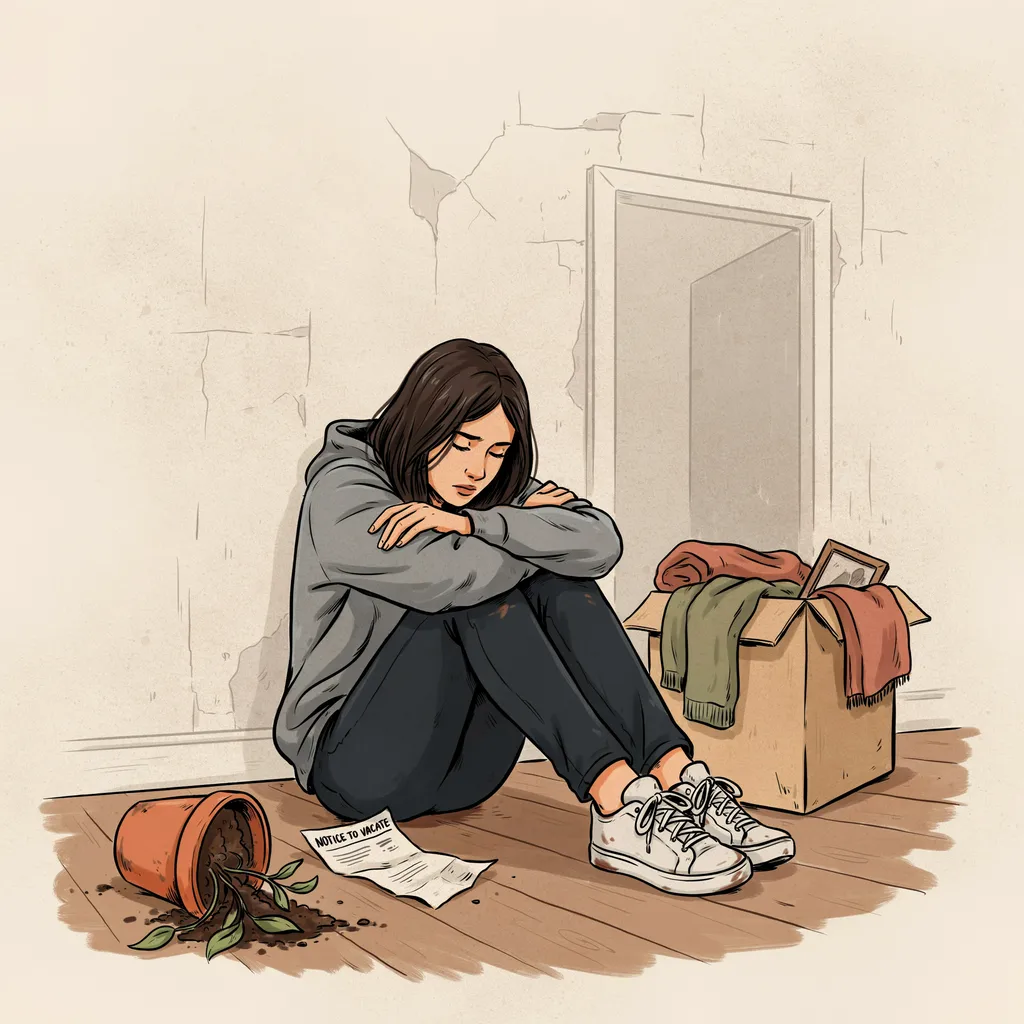
How Housing Instability Affects Mental Health — The Direct Mechanisms
The connection between housing instability and mental health is not just anecdotal. It operates through specific, well-understood mechanisms that researchers and clinicians have documented consistently across decades of study.
Here is how housing instability gets under the skin and into the mind.
1. Chronic Stress and the Nervous System
The human nervous system is designed to handle acute stress, the kind that comes from a specific threat and then resolves. It is not designed to handle the kind of chronic, low-grade, never-ending stress that housing instability produces. When a person does not know whether they will have a safe place to sleep next week, their nervous system stays in a state of hyperarousal, constantly scanning for threat, constantly bracing for the next blow.
This sustained stress response has direct neurological consequences. It elevates cortisol levels, which over time damages the hippocampus, the part of the brain responsible for memory, learning, and emotional regulation. It depletes the resources the brain needs for executive function, impulse control, and future-oriented thinking. And it makes every existing mental health condition significantly worse.
According to the American Psychological Association, chronic stress is one of the most significant contributors to the development and worsening of anxiety disorders, depressive disorders, and PTSD.
2. Sleep Disruption
Stable, safe, consistent sleep is one of the most important foundations of mental health. It is during sleep that the brain processes emotional experiences, consolidates learning, regulates mood, and restores the capacity for clear thinking.
Housing instability systematically destroys sleep quality. Shelter environments are noisy, unpredictable, and often unsafe. Couch surfing means never fully relaxing in someone else’s space. Living in a home with chronic conflict or safety concerns means staying partially alert even during sleep. Over time, this sleep disruption compounds into serious psychiatric consequences including increased risk of psychosis, severe mood instability, and cognitive impairment.
3. Loss of Control and Learned Helplessness
Mental health researchers consistently identify perceived control over one’s environment as a critical factor in psychological wellbeing. When people feel that their lives are fundamentally outside their own control, they are significantly more likely to develop depression, anxiety, and what psychologists call learned helplessness, a state where a person stops trying to change their situation because experience has taught them that their actions do not matter.
Housing instability is one of the most powerful generators of that sense of lost control. When you do not know where you will sleep, when forces outside your control determine whether you have shelter, and when every attempt to stabilize seems to be undermined by circumstances beyond your reach, learned helplessness can set in quickly and deeply.
4. Social Isolation
Human beings need stable social connection to maintain mental health. Housing instability systematically dismantles the social infrastructure that makes connection possible. It makes it harder to maintain relationships when you are constantly moving. In addition, it creates shame that drives people away from the connections they do have. It removes the consistent home base that social life is typically organized around.
Social isolation is one of the strongest risk factors for depression, anxiety, substance use, and suicidal ideation. The Journal of Epidemiology and Community Health identifies housing instability as one of the most significant drivers of social isolation among vulnerable adults, with direct downstream effects on mental health outcomes.
5. Disrupted Access to Treatment and Medication
For adults already managing mental health conditions, housing instability creates a logistical nightmare that makes treatment adherence nearly impossible. Without a stable address, accessing benefits is difficult. Without consistent daily routine, taking medications consistently is harder. Also, without transportation and a stable base, attending outpatient appointments becomes unreliable. And without a safe place to store medications, they get lost, stolen, or damaged.
The result is that mental health conditions that were manageable with consistent treatment become acute crises when housing instability interrupts that treatment. This is one of the primary reasons that housing-unstable adults show up in emergency rooms and psychiatric facilities at dramatically higher rates than their housed counterparts.
Call Now: 707-301-4051
The Cycle That Keeps People Stuck
One of the most important things to understand about housing instability and mental health is that they do not just affect each other in one direction. They create a self-reinforcing cycle that becomes increasingly difficult to break without intentional intervention.
Here is how the cycle typically works:
- Housing instability creates chronic stress, sleep disruption, social isolation, and disrupted treatment access
- These factors worsen mental health symptoms including depression, anxiety, psychosis, and substance use
- Worsening mental health makes it harder to navigate the systems required to access stable housing, maintain employment, and meet the requirements of housing programs
- The resulting inability to secure or maintain housing deepens the instability
- Deeper instability creates more stress and further worsening of mental health
- And the cycle continues
For families watching a loved one spin in this cycle, the frustration is profound. Each time someone seems to be making progress, instability undermines it. Each time a housing situation seems to be coming together, a mental health crisis derails it. It can start to feel like there is no way out.
The exit from this cycle almost always requires addressing housing and mental health simultaneously rather than sequentially. Waiting until someone is mentally stable to address their housing, or waiting until someone is housed to address their mental health, both approaches miss the way these two things are fundamentally intertwined.
What the Research Shows About Breaking the Cycle
The most effective interventions for breaking the housing instability and mental health cycle share a common feature. They address both housing and support services together rather than treating them as separate problems to be solved in sequence.
Here is what the evidence consistently shows:
Structured housing with wraparound services outperforms housing alone
Study after study shows that placing a mentally ill or substance-using adult in housing without accompanying support services produces poor long-term outcomes. The person may be housed temporarily but without the support to maintain that housing, they return to instability quickly.
Structured housing that combines a stable residential environment with medication management, behavioral health coordination, life skills development, and individualized support planning produces dramatically better long-term outcomes across every measure including psychiatric hospitalization rates, substance use relapse rates, and housing retention.
Stability itself is therapeutic
The National Alliance to End Homelessness and SAMHSA both identify stable housing as a direct mental health intervention, not just a precondition for mental health treatment. When a person moves from an unstable, unpredictable environment into a safe, consistent, structured residential setting, mental health symptoms frequently improve even before any clinical intervention takes place. The stability itself is healing.
Early intervention matters enormously
Adults who access structured housing support early in a period of instability show significantly better outcomes than those who wait until their housing situation has become chronic and their mental health has deteriorated severely. This is one of the strongest arguments for families and professionals acting quickly when they recognize the early signs of housing instability rather than waiting for a full crisis to develop.
What to Look For — Recognizing the Signs in Someone You Love
For families, recognizing that housing instability is affecting a loved one’s mental health is the first step toward doing something about it. Here are the signs to watch for.
A loved one may be caught in the housing instability and mental health cycle if you notice:
- Increasing anxiety, irritability, or emotional volatility that seems connected to housing uncertainty
- Withdrawal from family and social contact, often accompanied by shame about their living situation
- Deteriorating medication adherence or missed mental health appointments
- Sleep disturbances, exhaustion, or cognitive changes like difficulty concentrating or remembering things
- Increased substance use that seems to track with periods of housing stress
- Repeated short stays in different living situations without anything sticking
- A growing sense of hopelessness or statements suggesting they have stopped believing things can improve
- Physical health deterioration connected to poor nutrition, inadequate sleep, or inability to manage chronic conditions
If several of these are present, the situation is unlikely to improve on its own. The cycle needs to be interrupted by an intentional, structured intervention. And the sooner that intervention happens, the better the outcome tends to be.
Call Now: 707-301-4051
What Actually Helps — Practical Steps for Families and Professionals
Understanding the problem is only useful if it leads to action. Here is what actually works when a vulnerable adult is caught in the housing instability and mental health cycle.
For families:
The most important thing families can do is resist the instinct to manage the situation alone. The housing instability and mental health cycle is not something that love and good intentions can reliably break without professional support. Here is where to focus your energy.
Start by having an honest assessment of whether your home environment can realistically provide what your loved one needs right now. Not whether you love them enough. Whether your home can provide the structure, professional oversight, medication management, and behavioral health support they need during this period. For many families, the honest answer is no, and that is not a failure. It is information.
Next, reach out to structured housing programs before the situation reaches a crisis point. At Hazel’s Tranquility Place, we accept referrals from families directly. You do not need a professional intermediary to start the conversation. Our team will talk through your loved one’s situation honestly and help you understand whether our program is the right fit.
For families of adults in recovery, our guide on housing for women in recovery in Solano County and our article on recovery housing in Solano County explain in detail what structured recovery housing provides and why it breaks the instability cycle more effectively than unstructured housing options.
For professionals:
The most important shift for professionals working with housing-unstable adults with mental health conditions is to treat housing as a clinical priority, not an administrative one. The evidence is clear that housing instability is a direct driver of psychiatric deterioration and that stable, structured housing is a direct mental health intervention.
This means building housing assessment into every clinical encounter with high-risk adults. It means having reliable referral pathways to structured housing programs before a crisis forces the issue. And it means treating housing instability in a client’s history as a clinical red flag that warrants proactive intervention rather than a social circumstance to be noted and set aside.
Our article on how to submit a housing referral in Solano County walks professionals through the full referral process at Hazel’s Tranquility Place step by step.

How Hazel’s Tranquility Place Addresses Both Housing and Mental Health
Hazel’s Tranquility Place is specifically designed to interrupt the housing instability and mental health cycle by addressing both sides of it simultaneously.
Here is how our program does that in practice:
- Our structured daily routine removes the chronic unpredictability that keeps the nervous system in a state of stress, allowing residents to begin genuine mental health recovery from the moment they arrive
- Our medication management support ensures that residents maintain the treatment adherence that housing instability so frequently destroys
- Our coordination with behavioral health providers means that clinical treatment continues without interruption during the residential placement
- Our life skills programming builds the practical capacities that make stable independent housing achievable after the placement ends
- Our peer community addresses the social isolation that housing instability creates and replaces it with genuine connection and mutual support
- Our individualized transition planning ensures that residents leave with a real plan for maintaining housing stability long term, not just a temporary reprieve from instability
Across our three Solano County facilities, the men’s house in Glen Cove Vallejo, the women’s house in Cordelia Fairfield, and our Woodcreek Fairfield location, we have seen the cycle break. We have watched residents who arrived exhausted, isolated, and hopeless leave with stability, skills, and a genuine sense of what comes next.
That does not happen by accident. It happens because housing and mental health support are delivered together, consistently, by a team that understands how deeply the two are connected.
The Cycle Can Be Broken. But It Needs the Right Intervention.
Housing instability and mental health do not fix themselves. The cycle is real, it is well-documented, and it is genuinely difficult to escape without intentional, structured support. But it can be broken.
At Hazel’s Tranquility Place, we break it every day. We do it through safe, stable accommodations, structured daily programming, professional mental health coordination, peer community, and individualized planning that builds toward something real and lasting.
If someone you love is caught in this cycle right now, do not wait for the next crisis to act. Reach out today. Our team is ready to listen, answer your questions honestly, and help you find the right next step.
Call Now: 707-301-4051
Visit hazelstranquility.org or email info@hazelstranquility.org to submit a referral or learn more about our program.