
Recovery from substance use disorder is one of the hardest things a person can do. It requires courage, consistency, and an environment that actively supports the work rather than undermining it. Yet far too many people leave detox programs, residential treatment facilities, or hospitals and return directly to the same environments that contributed to their substance use in the first place.
The same stress, triggers, same people, same chaos. And then everyone wonders why relapse happens. The truth is that recovery does not happen in a vacuum. It happens in context. Where a person lives, who surrounds them, how their days are structured, and whether they feel safe and supported — all of these things have a direct and measurable impact on whether someone maintains sobriety and builds a life they actually want to live.
Recovery housing in Solano County addresses this reality head on. It provides the structured, supportive residential environment that individuals in recovery need to move from early sobriety into genuine, sustainable stability. At Hazel’s Tranquility Place, we have built our program around this understanding — offering men’s and women’s recovery housing in Vallejo and Fairfield designed to support the whole person, not just the absence of substances.
If you are a behavioral health partner, someone in recovery, or a family member searching for the right next step, this guide is for you.
Why Environment Is Everything in Recovery
Ask anyone with real experience in addiction recovery what makes the difference between relapse and long-term sobriety, and environment comes up again and again. Clinical treatment addresses the medical and psychological dimensions of addiction. But the environment a person returns to after treatment either reinforces that work or erodes it.
Here is why environment plays such a decisive role in the recovery journey:
- The brain in early recovery is highly sensitive to environmental cues. Places, people, and situations associated with past substance use can trigger intense cravings even after months of sobriety, making a clean break from triggering environments essential in the early stages.
- Chronic stress is one of the most reliable relapse triggers. Living in an unstable, unsafe, or chaotic environment keeps the nervous system in a state of threat — and substances have historically been used to manage that state.
- Social environment shapes behavior powerfully. Surrounding oneself with people who are also committed to sobriety creates positive social pressure and genuine peer accountability that isolated living cannot replicate.
- Routine and structure reduce the idle time and decision fatigue that increase vulnerability to relapse. A predictable, organized daily environment actively supports the mental and behavioral patterns that recovery requires.
- Safety matters. People who do not feel physically or emotionally safe cannot do the deep work of recovery. A calm, supervised residential setting removes many of the threats that undermine that sense of safety.
Recovery housing in Solano County is built on this understanding. The goal is not simply to give someone a place to sleep. It is to place them in an environment that is itself a therapeutic tool — one that actively supports their recovery every single day.
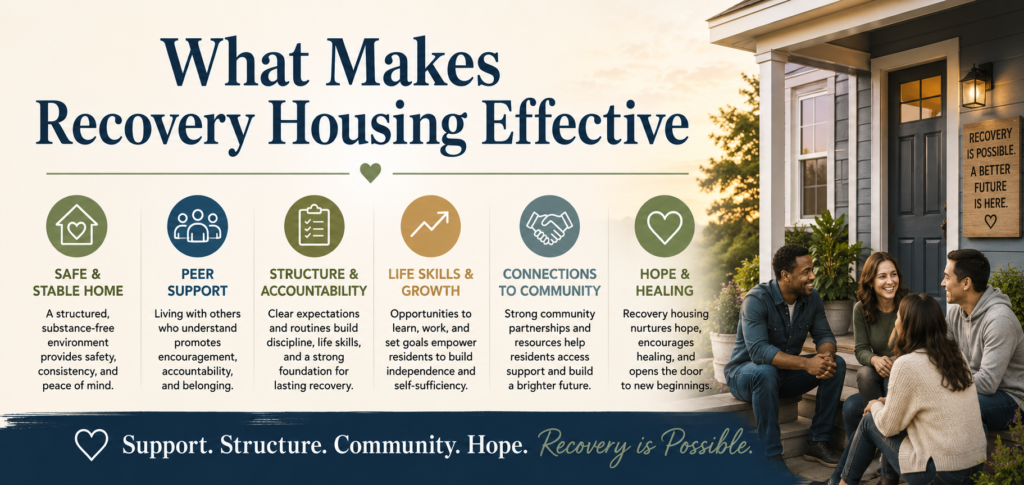
What Makes Recovery Housing Effective
Not all recovery housing operates the same way or produces the same outcomes. The evidence on what works points consistently to three core elements: structure, peer support, and accountability. When these three things are present and well-implemented, recovery housing dramatically improves long-term sobriety rates, reduces hospitalization, and helps residents build the foundations of a stable independent life.
Here is a detailed breakdown of each element and why it matters:
1. Structure
Structure in a recovery housing setting means that daily life is organized, predictable, and purposeful. It means mealtimes, wake times, curfews, programming schedules, and expectations are clearly defined and consistently maintained. For many individuals in recovery, this kind of external structure is something they have not experienced in years — and it serves a critical function.
Structure in recovery housing works because it:
- Reduces the unstructured time that is most dangerous for individuals in early sobriety
- Builds daily habits and routines that support mental health and physical wellbeing
- Provides a framework of expectations that prepares residents for the demands of independent living
- Reduces decision fatigue by making many daily decisions predictable and automatic
- Creates a sense of safety through consistency and predictability
2. Peer Support
Living alongside others who are navigating the same journey is one of the most powerful aspects of effective recovery housing. Peer support is not incidental, it is therapeutic. Sharing a home with people who understand the experience of addiction and recovery creates a culture of mutual understanding, encouragement, and honest accountability that professional staff alone cannot replicate.
Peer support in recovery housing works because it:
- Normalizes the experience of recovery and reduces shame and isolation
- Creates natural opportunities for mutual accountability — residents see each other every day
- Generates lived wisdom that complements professional clinical guidance
- Builds genuine community and belonging, which are among the strongest protective factors against relapse
- Models that long-term recovery is possible and worth working toward
3. Accountability
Accountability in recovery housing means that expectations are clear, behavior has consequences, and residents are not allowed to drift without engagement. This is not punitive. It is protective. The structure of accountability in a well-run recovery housing program mirrors the demands of sober community life and helps residents build the self-discipline and reliability that recovery requires.
Accountability in recovery housing works because it:
- Creates consequences for behavior that affect both the individual and the community, reinforcing real-world cause and effect
- Supports compliance with treatment plans, medication protocols, and appointment attendance
- Gives behavioral health partners and families confidence that the residential environment is actively reinforcing recovery goals
- Builds self-efficacy as residents experience the positive results of meeting expectations consistently
Recovery housing in Solano County that integrates all three of these elements gives residents the best possible platform for lasting change.
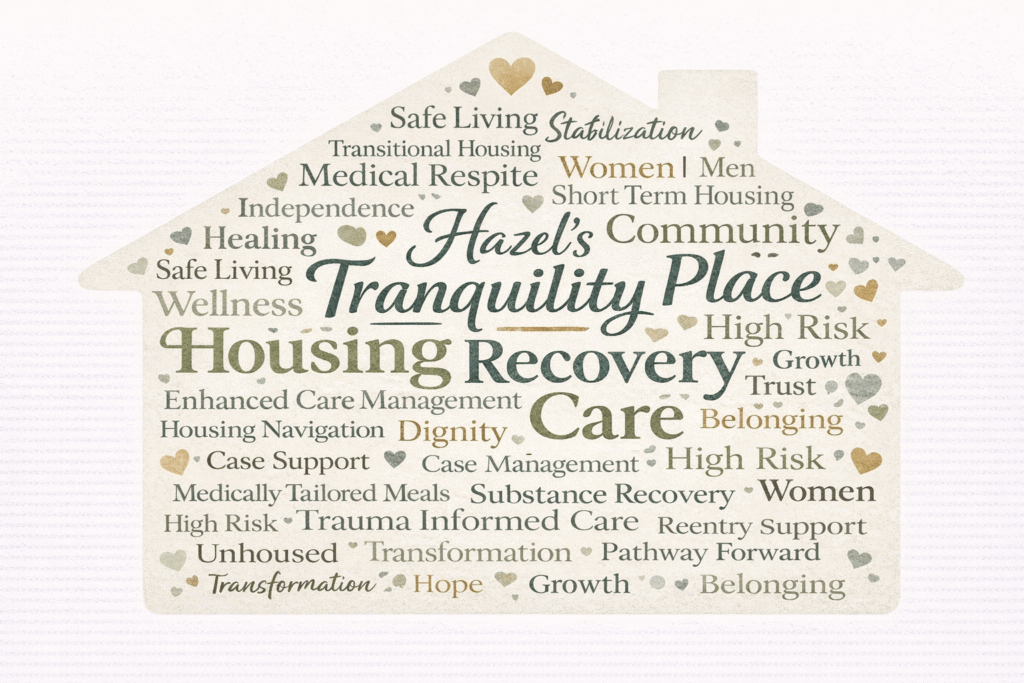
Recovery Support Services at Hazel’s Tranquility Place
Hazel’s Tranquility Place provides recovery housing in Solano County through two dedicated facilities — a women’s house in Vallejo and a men’s house in Fairfield. Both programs are built around the same core model: safe, structured, peer-supported residential care with wraparound services designed to support the whole person through the recovery process.
Here is a detailed look at what our recovery support services include:
1. Safe, Comfortable Residential Accommodations
Our homes are clean, well-maintained, and designed to feel like a genuine home rather than an institution. The physical environment matters in recovery. Residents need to feel that they are in a space that respects their dignity and supports their sense of worth. Both our Vallejo and Fairfield locations provide that standard of residential care.
2. Structured Daily Programming
Every day at Hazel’s Tranquility Place follows a structured schedule that includes mealtimes, house meetings, individual and group programming, and designated time for appointments, job searching, and personal development. This structure is intentional — it reduces idle time, builds healthy habits, and keeps residents engaged with their recovery goals.
3. Medication-Assisted Treatment Support
We support residents who are engaged in Medication-Assisted Treatment (MAT) as part of their recovery plan. Our staff coordinate with prescribing providers and treatment programs to ensure that MAT protocols are maintained consistently within the residential setting. We do not require residents to discontinue MAT as a condition of participation — we work with whatever evidence-based approach has been established by their clinical team.
4. Connection to Outpatient Treatment
Residential housing and outpatient treatment work best in combination. We actively coordinate with outpatient substance use programs, behavioral health providers, and community mental health centers across Solano County to ensure that residents remain connected to clinical care throughout their stay with us. Transportation support and appointment reminders are part of how we make this happen.
5. Peer Recovery Support
Our houses operate with a peer-informed culture. We incorporate peer recovery support into daily house life — through house meetings, shared responsibilities, mutual encouragement, and the lived experience of the community itself. We also connect residents to formal peer recovery support specialists in Solano County who can provide additional mentorship and guidance.
6. Life Skills Programming
Sobriety without practical life skills is fragile. Our programming addresses the functional dimensions of independent living — budgeting and financial management, cooking and nutrition, communication, job readiness, and navigating community resources. These are not peripheral activities. They are central to what recovery housing in Solano County at Hazel’s Tranquility Place is designed to achieve.
7. Behavioral Health Coordination
Many individuals in recovery are also managing co-occurring mental health conditions. Our staff are trained to recognize and respond to behavioral health needs, and we coordinate actively with each resident’s mental health providers to ensure that residential life supports rather than conflicts with their clinical treatment plan.
Call Now: 707-301-4051
Integrating Life and Stability Planning Into the Recovery Process
One of the things that distinguishes effective recovery housing in Solano County from a basic sober living arrangement is the integration of genuine life planning into the residential experience. Sobriety is the foundation — but it is not the whole building. Residents need to be actively building toward something: stable housing, employment, restored relationships, financial independence, and a life they want to maintain their sobriety for.
At Hazel’s Tranquility Place, life and stability planning is built into every stage of a resident’s time with us.
Here is how it works:
At Intake
Every new resident participates in an individualized intake process that goes beyond basic demographics and clinical history. We work to understand each person’s goals, strengths, challenges, and priorities. What do they want their life to look like in six months? In two years? What barriers stand between them and that vision? What resources and supports do they already have? The answers shape the individual plan we build with each resident from day one.
During the Placement
Life planning is not a one-time conversation. Throughout a resident’s stay, our staff check in regularly on progress toward goals, connect residents to the resources they need, and adjust the plan as circumstances change. Key areas of focus during this phase include:
- Employment readiness and job placement support
- Benefits enrollment and financial planning, including Medi-Cal, CalFresh, and SSI/SSDI where applicable
- Legal obligation management, including coordination with probation or parole where relevant
- Family relationship rebuilding and communication support
- Continued engagement with outpatient treatment and recovery community resources
As Transition Approaches
Moving out of recovery housing is a critical transition that requires its own careful planning. We begin transition planning well before a resident’s projected move-out date, working to secure appropriate permanent or longer-term housing, confirm that clinical supports will continue, and ensure the resident has a functional plan for the next chapter. We do not simply discharge people — we transition them with intention and support.
Who Should Be Referred to Our Recovery Housing Program
Recovery housing in Solano County at Hazel’s Tranquility Place is designed for adults who are in recovery from substance use disorder and ready to engage with a structured residential community. The program is not appropriate for individuals who require inpatient detox or medically supervised withdrawal — but for those who have completed that level of care and are ready for the next step, our program is built for exactly this moment.
Strong referral candidates include individuals who:
- Have recently completed detox, residential treatment, or a short-term inpatient stay and need a supported transition
- Are in early recovery and lack a safe, sober home environment to return to
- Have a history of relapse associated with returning to triggering people or environments
- Are managing a co-occurring mental health condition alongside their substance use recovery
- Are motivated to engage with programming, meet house expectations, and work toward independence
- Are adults 18 and older seeking men’s recovery housing in Fairfield or women’s recovery housing in Vallejo
- Are working with a behavioral health partner, case manager, or treatment program who can coordinate with our team
If you are unsure whether someone is an appropriate fit, call us directly. We will have an honest conversation and either confirm fit or help identify a more appropriate option.
Call Now: 707-301-4051
For Behavioral Health Partners Referring to Our Program
If you are a behavioral health provider, case manager, treatment program, or clinical team member looking to refer a client to recovery housing in Solano County, here is what working with Hazel’s Tranquility Place looks like:
- We accept referrals directly from outpatient programs, residential treatment facilities, hospitals, crisis stabilization units, and community-based case managers
- Our referral process is designed to be straightforward — we do not require excessive paperwork to begin a conversation about fit and availability
- We coordinate actively with your clinical team throughout the placement so that residential supports align with the treatment plan you have established
- We provide timely communication about resident progress, any behavioral concerns, and transition planning so that you remain informed and involved
- We welcome participation in case conferences and collaborative care planning meetings
To begin a referral, call us directly at 707-301-4051 or visit hazelstranquility.org. Have the following information ready when you call:
- Client’s name, date of birth, and current location
- Primary substance use history and current recovery status
- Co-occurring mental health diagnoses and current medications
- Level of care completed most recently (detox, residential, IOP, etc.)
- Current case manager or treatment team contact information
- Funding source (Medi-Cal, private pay, county funding, or other)
- Any safety considerations relevant to a community residential setting
Call Now: 707-301-4051
For Individuals in Recovery and Their Families
If you are personally in recovery and looking for a safe place to land, or if you are a family member trying to find the right option for someone you love, this section is for you.
For individuals in recovery:
Choosing recovery housing in Solano County is one of the most practical and powerful decisions you can make for your sobriety right now. Here is what you can expect at Hazel’s Tranquility Place:
- A safe, clean home environment where sobriety is the norm, not the exception
- Housemates who are on the same journey and a culture of genuine mutual support
- Staff who treat you with respect and engage with you as a full person with real goals
- Daily structure that keeps you moving forward rather than drifting
- Active support in building the life skills, connections, and plans you need for long-term independence
- A community that holds you accountable because it believes in your ability to succeed
You do not have to go back to an environment that does not support your recovery. There is another option.
For families:
Watching a loved one navigate addiction and recovery is exhausting and heartbreaking in equal measure. You want to help, but you may also know that bringing them home is not the right solution right now — not because you do not love them, but because the environment is not set up to support their recovery.
Choosing recovery housing in Solano County for a family member means:
- They are in a supervised, sober environment with trained professional staff
- They are building the skills and habits they need to sustain sobriety long-term
- You have space to take care of yourself while they do the work they need to do
- Family involvement is welcome where appropriate and with the resident’s consent
- The placement is a step forward, not a step away
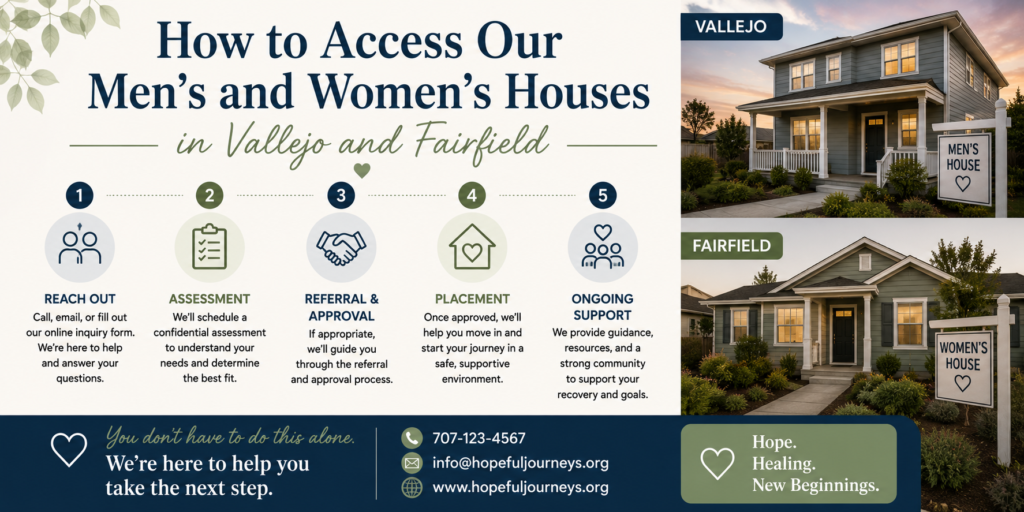
How to Access Our Men’s and Women’s Houses in Vallejo and Fairfield
Hazel’s Tranquility Place operates two recovery housing locations in Solano County:
- Women’s recovery house located in Vallejo
- Men’s recovery house located in Fairfield
Both programs operate under the same model and standards, with gender-specific programming and peer community designed to support the specific needs and experiences of each group.
To access our recovery housing in Solano County, here are your next steps:
Step 1 — Call us directly The fastest way to get started is to call 707-301-4051. Our team will answer your questions, discuss current availability, and walk you through what the program involves.
Step 2 — Complete a referral Whether you are a behavioral health partner referring a client or an individual or family member reaching out directly, we will walk you through a brief referral process to assess fit and availability.
Step 3 — Review and intake Our team reviews the referral information and completes an intake conversation — typically within one business day. We will be honest with you about whether our program is the right level of care for the specific situation.
Step 4 — Move-in coordination Once placement is confirmed, we coordinate the move-in process including orientation to house expectations, introduction to the peer community, and connection with the resident’s existing clinical providers.
Frequently Asked Questions
Q: Do residents need to be completely sober before entering recovery housing in Solano County at Hazel’s Tranquility Place?
Yes, residents are expected to be sober at the time of admission, which is why our program is designed as a step-down placement following detox or residential treatment rather than as an entry point for individuals who are actively using. If someone has not yet completed a detox or treatment program, we can help connect them to appropriate resources to get to that stage before referral.
Q: Is Medication-Assisted Treatment allowed in your recovery housing program?
Yes, we support residents who are engaged in Medication-Assisted Treatment as part of a clinician-approved recovery plan.
Q: How long can residents stay in your recovery housing program?
Length of stay is individualized based on each resident’s progress, goals, and transition readiness, as recovery timelines are not uniform and we do not believe in applying a fixed deadline to a process that looks different for every person.
Q: What happens if a resident relapses while living at Hazel’s Tranquility Place?
Relapse is addressed according to our program’s clear, documented policies, which prioritize both the safety of the residential community and the wellbeing of the individual concerned. Depending on the circumstances, the response may involve a corrective plan within the program, a temporary step-up to a higher level of care, or a discharge with active referral to appropriate treatment — and in every case, our team works to ensure the individual is not left without support.
Q: Can family members visit residents in your recovery housing program?
Family visits are supported where appropriate and in accordance with house guidelines, because we recognize that healthy family relationships are a meaningful protective factor in long-term recovery. All visits are coordinated through program staff to ensure that they support rather than disrupt the residential community and each resident’s individual recovery plan.
Recovery Is Possible And It Starts With the Right Environment
Recovery housing in Solano County is not the final destination. It is the launching pad. It is the place where the work done in treatment gets stabilized, deepened, and translated into a real life, one built on sobriety, purpose, and genuine connection.
At Hazel’s Tranquility Place, we are committed to being that place for the individuals and families who need it most. Whether you are a behavioral health partner looking for a trusted residential partner, someone in recovery ready to take the next step, or a family member searching for real help, we are here.
Do not wait for a crisis to make the call. Reach out today and find out whether our program is the right fit.
Call Now: 707-301-4051 or visit hazelstranquility.org