
You already know that a patient’s discharge destination is one of the most consequential clinical decisions made during any hospitalization. In addition, you have seen what happens when it goes right. You have also seen what happens when it goes wrong, the 2am readmission, the family calling in crisis, the patient back in the emergency department within a week of discharge, more unwell than when they first arrived.
A post-hospital housing plan is not paperwork. It is the clinical document that determines whether the work done during hospitalization holds or unravels the moment a patient walks out the door. And yet many housing plans produced under discharge pressure are incomplete, vague, or built around what is available rather than what is actually needed.
This guide gives you a practical, specific framework for building a post-hospital housing plan that actually works. Every element here reflects what the evidence shows about what prevents readmission, supports recovery, and gives vulnerable adults the genuine best chance at stability after discharge. We also share how Hazel’s Tranquility Place fits into that plan for patients in Solano County who need more than a standard home environment can provide.
Call Now: 707-301-4051
Why Most Post-Hospital Housing Plans Fall Short
Before getting into what a strong housing plan includes, it helps to be honest about why so many fall short. Not because social workers are not trying. They are working under enormous pressure with limited time, limited options, and caseloads that never stop growing.
The most common weaknesses in post-hospital housing plans are:
- They identify a discharge destination without assessing whether that destination can actually support the patient’s specific post-discharge needs
- They confirm a physical address without confirming what support exists at that address
- They document follow-up appointments without addressing whether the patient has the transportation, motivation, and daily structure to actually attend them
- They note medication needs without specifying who will manage medication adherence in the home environment
- They treat housing as a logistics problem rather than a clinical variable
- They are written to satisfy documentation requirements rather than to function as an actual plan for what happens after discharge
A post-hospital housing plan that avoids these weaknesses is not more complicated than a standard one. It is more specific. And specificity is what makes the difference between a plan that looks complete on paper and one that actually works in practice.
The Eight Elements Every Post-Hospital Housing Plan Should Include
1. A confirmed, appropriate discharge destination with a specific address
The first element sounds obvious but it frequently fails in practice. A confirmed discharge destination means a specific address that the patient is actually going to, not a family member who said they would probably take them in, not a shelter bed that is available today but may not be tomorrow, not a plan that depends on a phone call that has not been returned yet.
Furthermore, appropriate means that the environment at that address can support the patient’s specific post-discharge needs. A home address is not automatically appropriate. Ask specifically whether the home environment contains substances, conflict, or other conditions that directly undermine recovery. Ask whether the family members present are equipped to provide the level of daily support the patient actually needs.
For patients in Solano County who do not have an appropriate home environment to return to, Hazel’s Tranquility Place provides structured residential housing directly from hospital discharge. Our three facilities in Glen Cove Vallejo, Cordelia Fairfield, and Woodcreek Fairfield serve adults who need more than shelter during a vulnerable transition.
Download our fact sheet here: Hazel’s Tranquility Place Fact Sheet
2. A specific medication management plan
This is the element most often documented inadequately. A medication list is not a medication management plan. A medication management plan answers the following specific questions:
- Who will fill the prescriptions before discharge and when?
- Who will organize the medications in the home environment?
- Who will monitor daily adherence after discharge?
- What is the process when a dose is missed or a side effect emerges?
- Who is the prescribing provider and when is the first post-discharge appointment?
- How will the patient get to that appointment?
For patients who cannot manage medication adherence independently in an unstructured home environment, the medication management plan needs to include a residential placement whose staff provide daily medication monitoring. At Hazel’s Tranquility Place, our staff monitor that residents are taking medications and following care plans every day. Our women’s house in Cordelia Fairfield has a live-in medical assistant providing continuous support.
3. Confirmed follow-up appointments with transportation
Document every required follow-up appointment with the date, time, provider name, address, and specifically how the patient will get there. Transportation is one of the most common reasons follow-up appointments are missed. A plan that schedules the appointment without confirming transportation is a plan that assumes the appointment will happen rather than ensuring it.
For residents at Hazel’s Tranquility Place, Partnership HealthPlan covers transportation to medical appointments. Our women’s program offers Fairfield Fast Connect door-to-door pickup for non-medical trips. Our men’s program in Vallejo has nearby SolTrans bus access. Transportation barriers are built into our operational model rather than left for residents to navigate independently.
4. An identified care coordinator or case manager post-discharge
Who is the named professional responsible for this patient’s care coordination after they leave the hospital? Not a department or a program name. A specific named person with a direct phone number and a clear scope of responsibility.
For patients placed at Hazel’s Tranquility Place, care coordination continues through our partnership with Solano Impact Care. Their Enhanced Care Management program provides a dedicated care manager who helps residents enroll with a primary care physician, connects them to healthcare providers, and coordinates all medical needs. This service is typically authorized for up to 12 months through Partnership HealthPlan or Kaiser Permanente and is available regardless of bed placement.
Call Now: 707-301-4051
5. A behavioral health and substance use support plan
For patients with psychiatric conditions, co-occurring disorders, or substance use histories, the post-hospital housing plan must specifically address how behavioral health and substance use needs will be met after discharge. This means:
- Named outpatient behavioral health provider with first appointment confirmed
- Medication-Assisted Treatment plan if applicable including named prescriber and pickup schedule
- Peer recovery support or 12-step program connection if appropriate
- Named contact for behavioral health crisis if symptoms worsen post-discharge
A residential placement like Hazel’s Tranquility Place provides a clean and sober living environment with daily staff oversight that actively supports behavioral health recovery. External behavioral health providers are welcome to visit residents on-site at both our Vallejo and Fairfield facilities.
6. A financial and benefits assessment
A patient who cannot pay for housing, medications, or food will not maintain any of them regardless of how good the clinical plan is. The post-hospital housing plan should document:
- Current benefits status including Medi-Cal, Medicare, SSI/SSDI, CalFresh
- Any pending applications and expected timelines
- Primary income source and monthly amount
- Gaps between income and anticipated housing costs
- Action steps to close those gaps before or immediately after discharge
At Hazel’s Tranquility Place, our staff can assist residents in enrolling for EBT if they do not already have it. Our housing navigation support through Solano Impact Care works with each resident individually to identify income sources and realistic housing options. Our housing sustainability program covers budgeting and financial responsibility as part of the post-placement transition plan.
7. A safety assessment of the home environment
For patients returning to a family home or independent living situation, the post-hospital housing plan should document a specific safety assessment of that environment. This includes:
- Presence of substances in the home
- Domestic conflict or violence history
- Presence of other residents whose needs or behaviors affect the patient’s safety
- Physical accessibility for patients with mobility limitations
- Availability of a responsible adult to provide support if needed
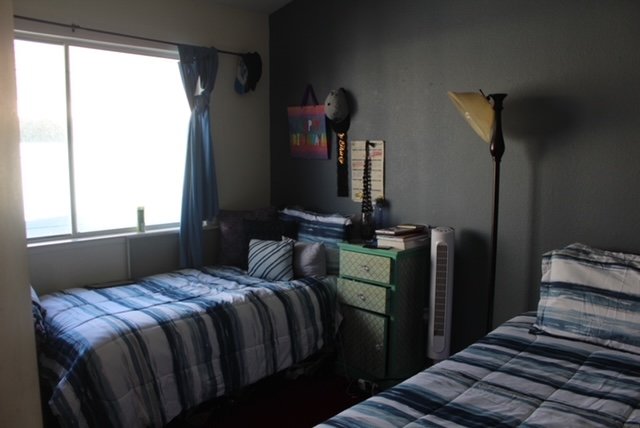
For patients whose home environment does not pass this assessment, a structured residential placement is the appropriate alternative. Hazel’s Tranquility Place facilities address physical accessibility directly. Our women’s house is entirely ground level with no stairs at all. Our men’s house has one downstairs bedroom and stairs with a mid-way landing. Both facilities have walk-in showers with handrails and grab bars next to toilets. Wheelchair accessibility is improving as carpet in the men’s house is being replaced.
8. A 30-day follow-up plan with named contacts and specific actions
The final element of a strong post-hospital housing plan is a specific plan for the first 30 days after discharge. Not general goals. Specific actions, dates, responsible parties, and contact information.
The 30-day follow-up plan should document:
- Who will check in with the patient in the first 72 hours after discharge and how
- Who is responsible for confirming the first week of medications was taken as prescribed
- Which professional will conduct a formal 30-day check-in and when
- What the escalation pathway is if the patient shows early warning signs of deterioration
- Who the family can call if they are concerned before the 30-day check-in
For our article on why this window is so critical, read the first 30 days after a crisis housing stability which covers in depth what the post-discharge period requires and why structured housing during this window changes long-term outcomes.
Submit a Referral Today at hazelstranquility.org
When a Patient Needs More Than a Home Environment Can Provide
Social workers encounter this situation constantly. The patient technically has somewhere to go. A family member is willing to take them in. But the home environment does not have the clinical support, the daily structure, or the distance from triggering conditions that this specific patient’s post-discharge recovery actually requires.
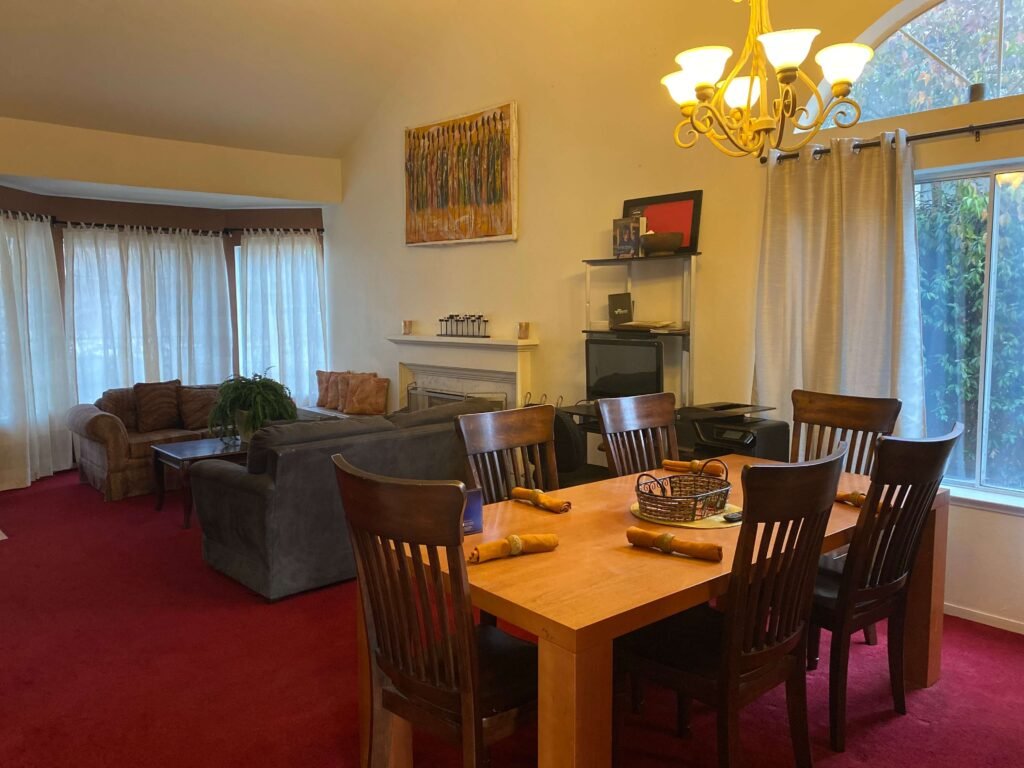
This is exactly the population Hazel’s Tranquility Place was designed to serve. Adults who need more than shelter. Adults whose recovery from hospitalization requires a safe, structured, professionally supported residential environment rather than a well-meaning family home that is not equipped for the clinical demands of what comes after discharge.
Our admission requirements are specific. Residents must be alert, oriented, and able to engage with an intake specialist. Medications must be self-administered. Residents must be independent with hygiene unless arriving with a formally assigned IHSS support person. Both facilities are clean and sober living environments. Referrals are screened for appropriateness and patients requiring detox or stabilization may be referred to a higher level of care prior to placement.
If a patient meets these criteria and does not have an appropriate home environment to return to, a referral to Hazel’s Tranquility Place may be exactly what their post-hospital housing plan needs.
Download our complete program information: Hazel’s Tranquility Place Fact Sheet
How to Refer a Patient to Hazel’s Tranquility Place
Our referral process is designed to work within the realities of hospital discharge timelines. Here is exactly how it works.
Step 1 — Contact us as early in the discharge planning process as possible
Our standard turnaround for referrals is 48 hours and we offer expedited placement for urgent situations. The earlier you reach out the more options we can work with. Call 707-301-4051, email care@solanoimpactcare.org, or submit online at hazelstranquility.org or solanoimpactcare.org.
Step 2 — Share the complete clinical picture
Include all patient barriers in the referral so we can identify needs and determine whether the patient may benefit from services beyond bed placement. A patient who does not qualify for residential placement may still qualify for Enhanced Care Management, housing navigation, or other support through Solano Impact Care.
Step 3 — We evaluate every referral for all available services
Not just bed placement. Every referral is reviewed for the full range of services available through the Solano Impact Care network.
Step 4 — Assessment and intake coordination
We conduct an assessment covering mobility, activities of daily living, health and wellness, and independence. Solano Impact Care verifies eligibility, schedules an intake coordinator meeting, and provides approval or alternative referral recommendations.
We actively partner with hospital social work teams, ED navigators, SNF units, SUD services, and post-acute discharge managers across Solano County. If your department wants to establish a formal referral partnership, reach out through hazelstranquility.org or email care@solanoimpactcare.org to request a presentation.
For our complete step-by-step referral guide, our article on how hospital social workers can improve discharge outcomes through housing partnerships covers the full process from a clinical coordination perspective.
Submit a Referral Today at hazelstranquility.org
Frequently Asked Questions for Social Workers
How quickly can Hazel’s Tranquility Place confirm a placement for a patient approaching discharge?
Our standard referral turnaround is 48 hours and we offer expedited placement for urgent discharge situations, so contacting us at 707-301-4051 as early in the discharge planning process as possible gives us the most time to assess fit and confirm availability across our three Solano County facilities.
What if a patient does not meet the admission criteria for residential placement?
Every referral is evaluated for all available services through Solano Impact Care, not just bed placement, which means patients who do not meet our residential criteria may still qualify for Enhanced Care Management, housing navigation, or community-based support services.
Does Hazel’s Tranquility Place accept patients covered by Partnership HealthPlan or Kaiser?
Yes, we are credentialed by Partnership HealthPlan, Medi-Cal, and Kaiser Permanente, and our Enhanced Care Management services are typically authorized for up to 12 months through Partnership HealthPlan or Kaiser.
Can external providers continue seeing a patient after they are admitted to Hazel’s Tranquility Place?
Yes, external providers including physical therapists, wound care nurses, and other healthcare professionals are welcome to visit residents on-site at both our Vallejo and Fairfield facilities.
What documentation should I have ready before submitting a referral?
Have the patient’s full diagnoses, current medications and prescribing providers, functional assessment including ADL independence level, insurance and funding information, active supervision requirements if applicable, and your direct contact information ready before you call so the intake process can move as quickly as possible.
Final Thoughts
The discharge summary tells the story of what happened during the hospitalization. The post-hospital housing plan determines what happens next. For social workers who understand that where a patient goes after discharge is a clinical decision with clinical consequences, building that plan with the specificity and intentionality it deserves is not extra work. It is the work.
At Hazel’s Tranquility Place, we exist to be the answer to the hardest part of that plan. For patients in Solano County who do not have an appropriate home environment to return to, we provide the structured, compassionate, professionally supported residential care that post-discharge recovery genuinely requires.
Download our fact sheet. Submit a referral. Or call us to start a conversation about a patient you are working with right now.
Call Now: 707-301-4051