
Ask any psychiatrist, case manager, or family member who has watched a loved one cycle through crisis after crisis, and they will tell you the same thing. Medication works when it is actually taken. It sounds obvious. But for many vulnerable adults, consistent medication adherence is one of the hardest things to maintain, especially during periods of housing instability, transition, or early recovery.
This is not a matter of willpower or motivation. It is a matter of environment. When someone is living in chaos, without routine, without support, and without anyone checking in, medications get missed. Doses get doubled up to make up for missed days. Prescriptions run out without refills. And the psychiatric or medical stability that medication was providing quietly unravels.
Medication management in supportive housing exists to interrupt that pattern. It is one of the most important and most underappreciated services that a structured residential program provides, and it is often the difference between a resident who stabilizes and one who cycles back into crisis.
This article explains what medication management in supportive housing actually involves, why it matters so much for recovery, and how Hazel’s Tranquility Place delivers it across our three Solano County facilities.
Why Medication Adherence Breaks Down Without Structure
Before looking at what medication management involves, it helps to understand why adherence becomes so difficult for vulnerable adults in the first place.
Here is what tends to disrupt consistent medication use:
- Unstable housing means medications get lost, stolen, or left behind during moves
- Lack of routine makes it easy to forget doses or lose track of timing
- Limited access to transportation makes it hard to get to pharmacies for refills
- Cognitive effects of untreated mental illness can make managing a medication schedule genuinely difficult
- Side effects that go unaddressed lead people to stop taking medication without medical guidance
- Substance use can interfere with medication routines or create dangerous interactions
- No one checking in means early signs of missed doses go unnoticed until a crisis develops
Each of these factors compounds the others. A person who is mentally unwell and unstably housed is dealing with several of these barriers simultaneously, which is exactly why medication management in supportive housing needs to be built into the residential model rather than left to chance.
What Medication Management in Supportive Housing Actually Involves
Medication management is more than handing someone a pill bottle and asking if they took it. In a well-run supportive housing program, it is a structured, consistent process designed to protect both safety and dignity.
Here is what effective medication management includes:
1. Organization and Tracking
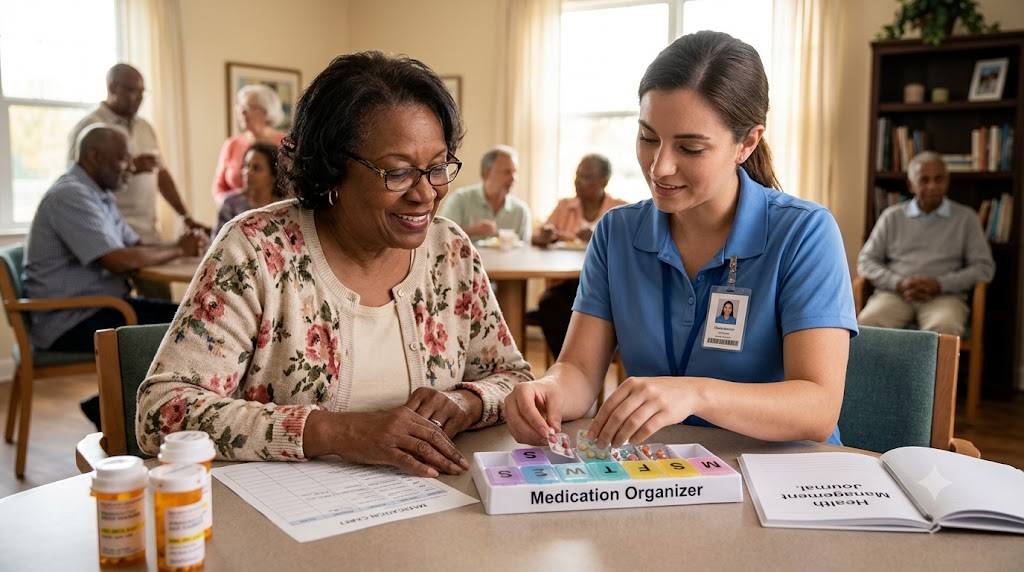
Staff help residents organize their medications clearly, often using pill organizers or structured systems that make it easy to see at a glance whether a dose has been taken. This removes the guesswork and cognitive load that medication management can otherwise demand.
2. Daily Monitoring
Trained staff check in with residents around medication times, not to police them, but to provide a consistent point of accountability and support. This daily rhythm builds habit and catches missed doses before they become a pattern.
3. Communication With Prescribing Providers
When a concern arises, whether that is a side effect, a missed refill, or a question about dosage, staff communicate directly with the resident’s prescribing physician or psychiatrist. This keeps the clinical team informed and ensures that adjustments happen quickly rather than after a crisis.
4. Refill Coordination
Running out of medication is one of the most common and most preventable causes of relapse and psychiatric decompensation. Supportive housing staff help residents track refill timelines and coordinate trips to the pharmacy so that gaps in medication supply do not happen.
5. Education and Empowerment
Good medication management is not just about doing things for residents. It is about building their own capacity to manage their health independently over time. Staff take time to explain what each medication does, why consistency matters, and how to recognize and report side effects, so that residents leave the program more capable, not more dependent.
6. Support for Medication-Assisted Treatment
For residents in recovery from substance use disorder, Medication-Assisted Treatment is often a critical part of their clinical plan. Supportive housing staff coordinate with MAT providers to ensure that this evidence-based treatment continues without interruption during the residential placement.
Call Now: 707-301-4051

Why Medication Management Matters So Much for Recovery
The connection between medication management in supportive housing and successful recovery outcomes is not theoretical. It shows up clearly across multiple dimensions of a resident’s stabilization.
It prevents psychiatric crises before they start
According to the National Institute of Mental Health, medication non-adherence is one of the leading causes of psychiatric hospitalization among adults with serious mental illness. When medication is managed consistently, the warning signs of decompensation are caught early, often before they escalate into a full crisis requiring emergency intervention.
It supports sustained sobriety
For residents using Medication-Assisted Treatment, consistency is directly tied to relapse prevention. Gaps in MAT adherence significantly increase the risk of relapse and overdose. Structured medication management closes that gap during one of the most vulnerable periods of recovery.
It builds the foundation for everything else
It is difficult to engage meaningfully with life skills programming, therapy, employment readiness, or relationship rebuilding when someone is psychiatrically unstable. Medication management is often the foundation that makes every other part of a resident’s stabilization possible. Stabilize the symptoms, and the rest of the work becomes accessible.
It reduces the burden on families
Families who have spent years managing a loved one’s medication schedule, often anxiously, often unsuccessfully, experience real relief when that responsibility shifts to trained professionals. This allows the family relationship to focus on connection rather than compliance monitoring.
It supports successful transitions
Residents who maintain consistent medication adherence throughout a supportive housing placement are significantly more likely to sustain that consistency after they transition to independent living, because the habits and systems built during the placement carry forward.
What Medication Management Looks Like at Hazel’s Tranquility Place
At Hazel’s Tranquility Place, medication management is built into daily life across all three of our Solano County facilities, the men’s house in Glen Cove Vallejo, the women’s house in Cordelia Fairfield, and our Woodcreek Fairfield location.
Here is what residents can expect:
- Trained staff who provide hands-on support with organizing and tracking medications
- Daily check-ins that build consistency without feeling intrusive or controlling
- Direct coordination with each resident’s prescribing physicians and psychiatrists
- Support for Medication-Assisted Treatment as part of a clinician-approved recovery plan
- Prompt communication with referring case managers, behavioral health providers, and probation officers when medication-related concerns arise
- A trauma-informed approach that treats medication support as a form of care, not control
We coordinate closely with our sister organization Solano Impact Care, which brings additional comprehensive care management and mental health and wellness interventions that complement the medication support residents receive in our homes.
Call Now: 707-301-4051
Who Benefits Most From Medication Management in Supportive Housing
Medication management is especially critical for residents who fall into the following categories:
- Adults managing serious mental illness such as schizophrenia, bipolar disorder, or major depression with psychotic features
- Individuals engaged in Medication-Assisted Treatment for substance use recovery
- Adults with co-occurring mental health and substance use conditions
- Residents managing chronic physical health conditions alongside psychiatric needs
- People recently discharged from a hospital or psychiatric facility where medications were just started or adjusted
- Adults with a history of medication non-adherence linked to previous hospitalizations or relapses
For professionals making a referral, this is one of the most important pieces of information to share with us upfront. The more clearly we understand a resident’s medication needs before they arrive, the more smoothly we can support them from day one.
Our guide on how to submit a housing referral in Solano County outlines exactly what information to provide, including current medications and prescribing providers, when making a referral.
Frequently Asked Questions
Q: Does Hazel’s Tranquility Place administer medications directly to residents?
Our staff provide organization, monitoring, and support around medication adherence in coordination with each resident’s prescribing providers, and the specific level of support is tailored to each individual’s needs and clinical plan.
Q: Can residents continue Medication-Assisted Treatment while living at Hazel’s Tranquility Place?
Yes, we support residents engaged in Medication-Assisted Treatment as part of a clinician-approved plan and coordinate directly with MAT providers to ensure continuity throughout the placement.
Q: What happens if a resident experiences a side effect from their medication?
Staff communicate promptly with the resident’s prescribing provider whenever a side effect or concern arises, ensuring that clinical adjustments happen quickly rather than waiting until the next scheduled appointment.
Q: How does medication management work with a resident’s existing psychiatrist or doctor?
We coordinate directly with each resident’s existing providers rather than replacing them, so that medication management at Hazel’s Tranquility Place supports and reinforces the clinical plan already in place.
Q: Is medication management included for every resident or only those with specific needs?
Every resident receives the level of medication support appropriate to their individual situation, ranging from light monitoring to hands-on daily assistance, based on what their clinical needs actually require.
Consistency Is the Foundation of Recovery
Medication management in supportive housing is not a side service. It is one of the central pillars that makes genuine recovery and stabilization possible. Without it, even the most promising treatment plan can unravel under the weight of chaos and inconsistency. With it, residents have the foundation they need to engage fully in every other part of their healing.
At Hazel’s Tranquility Place, we take this responsibility seriously across all three of our Solano County locations, because we know that consistency saves lives and changes trajectories.
If someone you love or someone on your caseload needs a structured environment that takes medication management seriously, reach out today.
Call Now: 707-301-4051
Visit hazelstranquility.org or email info@hazelstranquility.org to submit a referral or learn more.