
This situation comes up more often than anyone in healthcare likes to admit. A patient is medically stable. The clinical work is done. The team is ready to discharge. And then someone asks the question that changes everything.
Where is this person going to go?
And the honest answer is nowhere safe. Nowhere equipped to support what this patient actually needs right now. Nowhere that will not undo everything the hospitalization worked to achieve within days of discharge.
This is not a rare edge case. For a significant and growing number of patients across Solano County, the absence of a safe recovery environment is one of the most pressing clinical problems at the point of discharge. And it is a problem that clinical documentation, a follow-up appointment, and a prescription cannot solve on their own.
So what should actually happen when a patient has no safe place to recover? This article answers that question directly, practically, and honestly for the families, professionals, and individuals who are facing it right now.
First, Define What Safe Actually Means
Before identifying solutions, it helps to be clear about what a safe recovery environment actually requires. Because safe means more than the absence of immediate physical danger.
A safe place to recover after hospitalization provides:
- Consistent medication management support so clinical gains do not unravel through missed doses
- Daily structure that supports healing rather than creating the chronic stress that undermines it
- Distance from the triggers, substances, and destabilizing conditions most likely to cause relapse or readmission
- Professional oversight capable of recognizing early warning signs before they escalate to crisis
- Basic physical safety including clean, stable accommodations with appropriate accessibility
- Connection to the follow-up clinical care that post-discharge recovery depends on
When a patient’s available living situation cannot provide these things, that situation is not a safe recovery environment regardless of whether it has an address. Couch-surfing is not a safe recovery environment. Returning to a home full of substances is not a safe recovery environment. Moving in with a family member who loves them but is not equipped for their clinical needs is not a safe recovery environment.
What Should Happen Immediately
When it becomes clear during discharge planning that a patient has no safe place to recover, several things should happen immediately rather than at the end of the planning process.
Raise it as a clinical priority, not an administrative one
Housing instability at discharge is not a logistics problem to be managed after the clinical plan is finalized. It is a clinical problem that belongs in the center of the discharge planning conversation from the moment it is identified. A patient without a safe recovery environment cannot implement any clinical plan successfully. Consequently, housing needs to be resolved before discharge, not after.
Do not accept an unsafe placement to clear a bed
The pressure to move patients through the discharge process quickly is real. It is also one of the most common drivers of poor discharge outcomes. Discharging a patient to an unsafe environment to resolve a bed management problem creates a readmission that costs more, clinically and financially, than the extended stay would have. Push back on that pressure when the safety case is clear.
Contact structured housing programs early
The earlier a housing program is contacted in the discharge planning process, the more options exist. Hazel’s Tranquility Place has a 48-hour referral turnaround and offers expedited placement for urgent situations. However, expedited options work best when they are not the first contact made on the day of discharge. Call as soon as the housing gap is identified.
Involve the family in an honest conversation
If family members are available and involved, bring them into an honest conversation about what the patient actually needs in a recovery environment and whether the family home can realistically provide it. This conversation is sometimes difficult. It is almost always more useful than the alternative of assuming the family home is safe without assessing it directly.
Our article on how can housing instability complicate hospital discharge covers in detail how the absence of safe housing affects every dimension of the discharge process and what it costs when it is not addressed proactively.
Call Now: 707-301-4051
The Options That Actually Exist
When a patient has no safe place to recover, the realistic options fall into a few categories. Understanding each one helps discharge planners, case managers, and families identify the most appropriate next step quickly.
Structured supportive housing
This is the most appropriate option for patients who are medically stable but need a professionally supported residential environment with daily structure, medication management, clinical coordination, and distance from destabilizing conditions.
Hazel’s Tranquility Place provides exactly this level of care across three Solano County facilities. Our women’s program in Cordelia, Fairfield is entirely ground level with no stairs. Also, our men’s program in Glen Cove, Vallejo has most rooms upstairs with one downstairs bedroom. Our third facility in Woodcreek, Fairfield extends capacity across the county. All three locations are clean and sober living environments with daily on-site staff. Our women’s house has a live-in medical assistant providing continuous support.
Placement is free for qualifying members of Partnership HealthPlan of California and Kaiser Permanente. All placements are coordinated through Solano Impact Care.
Short-term family placement with formal support
When a family member is genuinely willing and their home environment is appropriate, a family placement supported by formal care coordination can work for some patients. The key word is supported. A family member who is willing but who has no professional backup for medication management, behavioral health coordination, and crisis response is not a sufficient recovery environment for complex patients.
In these situations, Enhanced Care Management through Solano Impact Care can provide the professional coordination layer that makes a family placement clinically viable. Their dedicated care managers help with primary care enrollment, healthcare coordination, and ongoing clinical oversight for up to 12 months through Partnership HealthPlan or Kaiser Permanente.
Skilled nursing or subacute care
For patients whose medical needs exceed what a community residential setting can safely manage, skilled nursing or subacute placement is the appropriate next step. Hazel’s Tranquility Place serves patients who are medically stable and able to engage with an intake specialist. Patients requiring a higher level of medical management need the level of care that skilled nursing provides.
Extended inpatient stay with active housing search
When no appropriate community placement is immediately available and discharge to an unsafe environment is not clinically acceptable, an extended inpatient stay with an active, documented housing search happening in parallel may be the most honest option. This is not a failure of discharge planning. It is a recognition that patient safety is a clinical imperative and that discharging someone to harm to resolve a bed management problem is not an acceptable clinical decision.
What Hazel’s Tranquility Place Provides for Patients Without Safe Recovery Options
Hazel’s Tranquility Place was founded specifically to address the gap between acute clinical care and the community settings that patients return to after discharge. Our program receives patients directly from hospital discharge and provides the structured, professionally supported residential environment that safe recovery requires.
Here is what patients without a safe recovery option find at our facilities:
Safe, clean, home-like residential accommodations
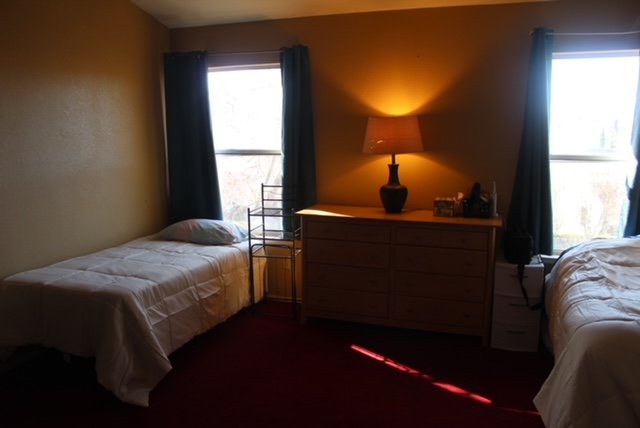
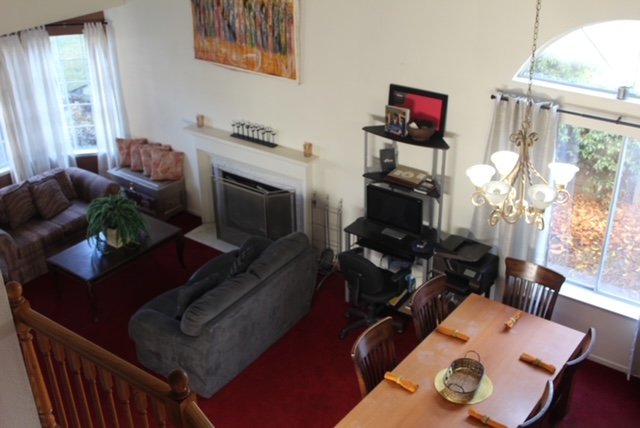
Both our Vallejo and Fairfield facilities maintain a standard of cleanliness and comfort that communicates dignity and care from the moment a patient arrives. No bunk beds. No garage or living room placements. Most rooms have two beds with a few larger master rooms accommodating three residents.
Daily professional support
Both facilities have daily on-site staff. Our women’s house has a live-in medical assistant providing continuous support. Staff monitor that residents are eating, taking medications, and following care plans every single day. External providers are welcome to visit residents on-site.
Medication management from day one
One of the most dangerous moments in any hospital discharge is the medication handoff. At Hazel’s Tranquility Place, our staff manage this transition directly. We review the medication list at intake, confirm prescribing providers, establish daily monitoring systems, and coordinate refills before gaps develop. Our article on medication management in supportive housing why it matters for recovery explains why this daily support is one of the most clinically significant things we provide.
Transportation to medical appointments
Partnership HealthPlan covers transportation to medical appointments for our residents. Our women’s program offers Fairfield Fast Connect door-to-door pickup for non-medical trips. Our men’s program has nearby SolTrans bus access. Transportation barriers that commonly cause follow-up appointment failures are addressed rather than left to chance.
Extended care coordination through Solano Impact Care
Through our partnership with Solano Impact Care, residents access Enhanced Care Management that continues for up to 12 months after placement regardless of residential status. So when a patient eventually transitions out of our residential program, their care coordination does not end. It continues. That continuity is one of the most powerful safeguards against the readmission cycle that unsafe discharge destinations produce.
Submit a Referral Today at hazelstranquility.org
For Families: What to Do When You Cannot Provide a Safe Recovery Environment
If you are a family member and you know, honestly, that your home cannot provide what your loved one needs to recover safely, please hear this clearly. That recognition is not a failure. It is one of the most important and loving assessments you can make.
Families who bring loved ones home to environments that cannot support their recovery do not protect their loved ones. They delay the crisis while absorbing costs, physical and emotional, that nobody should have to carry alone.
Choosing a structured supportive housing program for a loved one who has no safe place to recover is choosing to get them the professional environment that their clinical situation actually requires. That is not giving up. That is getting it right.
Contact Hazel’s Tranquility Place directly. You do not need to go through a professional referral source to start the conversation. Call 707-301-4051 or visit hazelstranquility.org and our team will talk through your loved one’s situation honestly and help you understand whether our program is the right fit.

How to Refer a Patient to Hazel’s Tranquility Place
For professionals, here is exactly how to move forward when a patient has no safe place to recover.
Contact Solano Impact Care, who coordinates all placements at Hazel’s Tranquility Place, through any of the following channels:
- Call: 707-301-4051
- Email: care@solanoimpactcare.org
- Online: solanoimpactcare.org or hazelstranquility.org
Have the following ready when you call:
- Patient’s full name, date of birth, and current location
- Primary diagnoses including psychiatric, medical, and substance use history
- Current medications and prescribing providers
- Functional assessment including ADL independence level
- Insurance and funding information including Partnership HealthPlan or Kaiser membership status
- Active supervision requirements if applicable
- Your direct contact information and discharge timeline
Every referral is evaluated for all available services, not just bed placement. Patients who do not qualify for residential placement may still qualify for Enhanced Care Management, housing navigation, or other support through Solano Impact Care.
Final Thoughts
The absence of a safe recovery environment at the point of hospital discharge is not an inevitable outcome. It is a gap in the care continuum that has a specific solution for patients in Solano County.
That solution is Hazel’s Tranquility Place. A structured, compassionate, professionally supported residential program that receives patients directly from hospital discharge and provides the safe recovery environment that clinical stability requires.
Do not discharge a patient to an unsafe situation because the alternative feels too complicated to arrange. Make the call. Start the referral. Give your patient the recovery environment their clinical situation demands.
Call Now: 707-301-4051
Visit hazelstranquility.org or email care@solanoimpactcare.org to submit a referral today.