
Hospital discharge should be a moment of progress. The patient is medically stable. The clinical team has done their work. The next step is recovery. But for a significant number of patients across Solano County, discharge does not feel like progress. It feels like falling off a cliff.
Housing instability is one of the primary reasons why.
When a patient does not have a safe, stable, appropriate place to go after leaving the hospital, discharge becomes genuinely complicated. Not just logistically. Clinically. The absence of appropriate housing actively threatens everything the hospitalization worked to achieve. And it creates a cascade of problems that affects the patient, the family, the clinical team, and the healthcare system simultaneously.
This article explains specifically how housing instability complicates hospital discharge, what that means for everyone involved, and how structured supportive housing resolves those complications for patients in Solano County.
Call Now: 707-301-4051
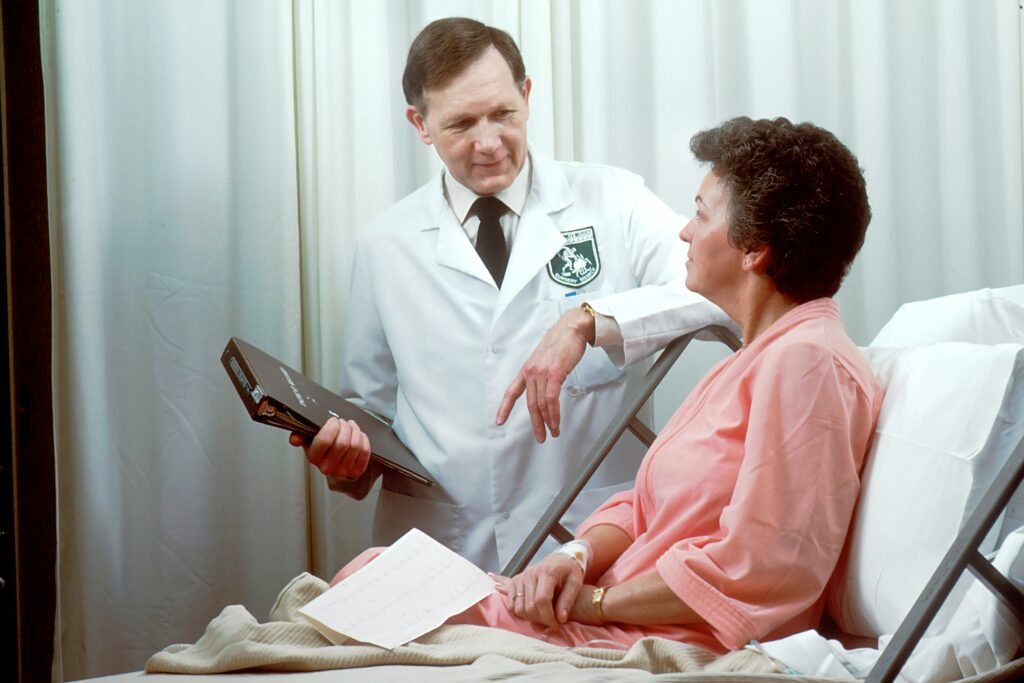
Photo by National Cancer Institute on Unsplash
The Discharge Problem Nobody Talks About Enough
Discharge planning typically focuses on the clinical picture. Medications. Follow-up appointments. Referrals. Level of care. These things matter enormously. But when housing instability is present, the clinical picture cannot be separated from the housing picture. They affect each other directly and immediately.
A patient who is medically ready for discharge but has nowhere safe to go presents a problem that clinical documentation alone cannot solve. The discharge summary can be perfect. The medication list can be complete. The follow-up appointment can be scheduled. And the patient can still walk out of the hospital into a situation that unravels everything within days.
Housing instability complicates hospital discharge in several specific, predictable ways. Understanding each one helps discharge planners, case managers, and families make more informed, more effective decisions during the discharge planning process.
Complication One: Discharge Gets Delayed
When a patient is medically ready to leave but has no safe housing destination, discharge planners face a genuinely difficult situation. Discharging someone to an unsafe or unstable environment creates clinical and ethical problems. Keeping them in the hospital beyond medical necessity creates operational and financial ones.
Consequently, housing instability directly extends hospital stays. Beds that should be turning over remain occupied. Resources designed for acute care get used for what is essentially a housing problem. And the patient remains in an inpatient setting past the point where inpatient care is appropriate for their clinical needs.
This delay is costly in every direction. It costs the hospital. It costs the patient’s recovery trajectory. And it costs the healthcare system resources that should be available for acute clinical needs.
At Hazel’s Tranquility Place, our 48-hour referral turnaround and expedited placement option exist specifically to address this problem. When discharge planners contact us early in the planning process, we work to confirm placement before discharge is delayed rather than after it has already extended unnecessarily.
Complication Two: The Clinical Plan Falls Apart Immediately
Every clinical plan built during a hospitalization assumes a baseline. It assumes the patient will have a stable environment in which to take their medications consistently. A safe space to sleep and eat and rest. Some degree of support for attending follow-up appointments. These assumptions are reasonable for many patients. For patients with housing instability, they are often wrong.
When a patient returns to housing instability after discharge, the clinical plan unravels in specific, predictable ways:
- Medications are the first thing to go. Without a stable environment, medications get lost, forgotten, or deprioritized against more immediate survival demands
- Follow-up appointments get missed because transportation, motivation, and daily functioning capacity all require a baseline stability that housing instability destroys
- Sleep and nutrition deteriorate immediately in unstable environments, directly undermining physical and psychiatric recovery
- Behavioral health gains made during the hospitalization erode in environments characterized by conflict, chaos, or exposure to substances
Furthermore, the stress of housing instability is not a background condition that patients manage alongside their recovery. Chronic stress directly activates the physiological systems that recovery is trying to calm. It is not a complication of recovery. It is an obstacle to it.
Our article on how housing instability affects mental health and what to do about it covers in detail the specific neurological and psychological mechanisms through which housing instability undermines recovery and what structured housing does to address them.
Call Now: 707-301-4051
Complication Three: Readmission Becomes Almost Inevitable
This is the outcome that nobody wants and that housing instability makes highly predictable. Research published in Health Affairs identifies housing instability as one of the strongest independent predictors of 30-day hospital readmission across psychiatric, medical, and substance use discharge categories.
The mechanism is direct. Housing instability disrupts medication adherence. Disrupted medication adherence produces clinical deterioration. Clinical deterioration produces a crisis. And a crisis produces a return to the emergency department.
For discharge planners, this pattern is familiar. The same patients cycle through repeatedly. Each readmission resets the clinical work accomplished during the previous stay. And each cycle leaves the patient more depleted, the family more exhausted, and the clinical team more frustrated by a problem that medicine alone cannot solve.
The intervention that breaks this cycle most reliably is structured supportive housing in the immediate post-discharge period. Not eventually. Immediately. During the window when housing instability is most likely to undo the clinical work of the hospitalization.
Complication Four: Families Face Impossible Choices
Housing instability at the time of hospital discharge frequently puts families in a position that is genuinely impossible. The clinical team needs a discharge destination. The patient needs somewhere safe to go. And the family is left trying to fill a gap they did not create and are not resourced to fill.
Some families say yes when they should say no. They bring a loved one home to an environment that cannot support their recovery because the alternative feels like abandonment. Consequently, family members exhaust themselves trying to provide clinical support they were never trained to deliver. And the patient deteriorates anyway because the home environment was not equipped for what post-discharge recovery actually requires.
Other families say no when they want to say yes. They recognize honestly that their home cannot provide what their loved one needs. But without a clear alternative, that honest recognition produces guilt rather than a solution.
Both of these situations are the direct result of housing instability complicating a discharge process that has no good options. Structured supportive housing creates a third option. One that serves the patient clinically, protects the family from an unsustainable caregiving burden, and gives the discharge a genuine destination rather than a compromised one.
Our article on what families can expect when referring a loved one to hazel’s tranquility place addresses directly how families can navigate the discharge housing decision with honesty and support.
Complication Five — Discharge Planners Carry an Unmanageable Burden
For hospital social workers and discharge planners, housing instability does not just complicate a single discharge. It consumes disproportionate time and clinical energy from professionals who are already managing more cases than any reasonable workload allows.
A patient with stable housing and a clear discharge destination requires relatively straightforward coordination. A patient with housing instability requires extended coordination across multiple systems, repeated calls to programs that may or may not have availability, difficult conversations with families who may or may not be able to help, and documentation that needs to reflect the clinical rationale for decisions made under genuine constraint.
Multiply that across a caseload and the impact of housing instability on discharge planning departments becomes clear. It is not one complicated discharge. It is a systemic drain on clinical resources driven by a gap in the care continuum that discharge planning alone cannot fix.
Building reliable referral partnerships with structured housing programs that respond quickly, communicate clearly, and receive patients directly from discharge removes some of that burden. Our article on how hospital social workers can improve discharge outcomes through housing partnerships covers exactly how those partnerships work and what discharge planners should look for in a housing program partner.
Submit a Referral Today at hazelstranquility.org

How Hazel’s Tranquility Place Resolves These Complications
Hazel’s Tranquility Place exists specifically to address the complications that housing instability creates at the point of hospital discharge. Here is how our program resolves each one:
- We provide a confirmed, appropriate discharge destination with a specific address across three Solano County facilities in Glen Cove Vallejo, Cordelia Fairfield, and Woodcreek Fairfield
- We implement the clinical discharge plan from day one including medication management support, appointment coordination, and communication with prescribing providers
- We provide the daily structure, monitoring, and professional support that prevents the cascade of clinical deterioration that housing instability produces
- We give families a safe, professional residential option that serves the patient without placing an unsustainable caregiving burden on the family
- We respond to referrals within 48 hours and offer expedited placement for urgent discharge situations
All placements are coordinated through our sister organization Solano Impact Care, whose Enhanced Care Management program provides dedicated care coordination, connection to primary care, and ongoing clinical support typically authorized for up to 12 months through Partnership HealthPlan or Kaiser Permanente.
Placement is free for qualifying members of Partnership HealthPlan of California and Kaiser Permanente. External providers including physical therapists and wound care nurses are welcome to visit residents on-site at all facilities.
Call Now: 707-301-4051
Frequently Asked Questions
How early in the discharge planning process should we contact Hazel’s Tranquility Place?
Contact us the moment you identify that housing instability may affect the discharge because our 48-hour turnaround works best when we have time to assess fit and coordinate placement before discharge is delayed rather than after it has already extended.
What if a patient is medically ready for discharge but no structured housing placement is immediately available?
Call us directly at 707-301-4051 and discuss the specific situation because availability changes regularly across our three facilities and expedited options exist for urgent discharge situations that need faster resolution than a standard referral timeline allows.
Can Hazel’s Tranquility Place accept patients directly from hospital discharge on the same day?
Yes, when a placement has been arranged in advance through the referral process we can receive residents directly from hospital discharge, which is exactly why early contact during the discharge planning process produces the smoothest outcomes for everyone involved.
What if a patient does not qualify for residential placement at Hazel’s Tranquility Place?
Every referral is evaluated for all available services through Solano Impact Care beyond bed placement, which means patients who do not meet residential criteria may still qualify for Enhanced Care Management, housing navigation, or community-based support services that address the specific complications their housing instability is creating.
Conclusion
The complications that housing instability creates at the point of hospital discharge are not administrative inconveniences. They are clinical outcomes, produce readmission, medication non-adherence, family crisis and consume clinical resources. And they undermine the work that the entire hospitalization was designed to accomplish.
Treating housing instability as a clinical problem rather than a logistics problem changes how discharge planning approaches it. It changes when the conversation starts, what solutions are considered, and how urgently the right housing destination is pursued.
At Hazel’s Tranquility Place, we are ready to be part of that solution for patients across Solano County. Reach out today.
Call Now: 707-301-4051
Visit hazelstranquility.org or email care@solanoimpactcare.org to submit a referral or connect with our team.