
If you are thinking about entering a supportive housing program, or if someone you love is about to, this question is probably somewhere in your mind. Maybe you have not said it out loud yet. But it is there. Will I be able to leave when I am ready? Or is this a situation where I give up control over when and how I move on with my life?
The short answer is yes. At Hazel’s Tranquility Place, residents are not trapped. Supportive housing is not a permanent placement by default. It is a structured, time-limited residential program designed to help you stabilize and build toward the next chapter of your life. But the longer answer is more nuanced than a simple yes. Because leaving supportive housing when you are ready involves understanding what readiness actually means, how the transition process works, and what Hazel’s Tranquility Place does throughout your placement to make sure that when you do leave, you leave with something real to go to.
This article answers all of those questions honestly, from the perspective of someone who is thinking about what entering a program actually means for their freedom and their future.
Call Now: 707-301-4051
Supportive Housing Is Not Permanent By Design
The first thing to understand is that supportive housing programs like Hazel’s Tranquility Place are designed as transitional placements, not permanent living arrangements. The entire model is built around moving people forward, not keeping them in place.
Think of it this way. Supportive housing sits in the space between a crisis and independent living. It is the structured intermediate step that gives you the stability, skills, and support you need to make independent living genuinely sustainable rather than an immediate return to the same conditions that contributed to your crisis.
From the very first day of your placement at Hazel’s Tranquility Place, our team is working with you on what comes next. Not because we want you to leave before you are ready. Because getting you to a genuinely stable, independent life is the whole point of why we exist.
Typical stays at Hazel’s Tranquility Place are up to six months based on need and eligibility. That timeline is not a rigid countdown. It is a framework that guides the planning process while remaining flexible to individual circumstances. Some residents are ready to transition sooner. Others need the full duration. What drives the timeline is your actual progress, not an arbitrary date on a calendar.
What Readiness to Leave Actually Means
Readiness is not the same as feeling ready. Plenty of people feel ready to leave a structured program before they have genuinely built the foundation that independent living requires. And plenty of people do not feel ready right up until the moment they successfully transition, after which they realize they were more prepared than they thought.
So what does genuine readiness actually look like? At Hazel’s Tranquility Place, we assess readiness across four interconnected dimensions.
Stable confirmed housing
You need a specific, confirmed place to go. Not a hope or a possibility. A confirmed address, a confirmed tenancy, and a confirmed start date. Our housing navigation support works with you individually throughout your placement to identify realistic housing options, work through waitlists and applications, and connect you to local landlords and properties familiar with our client population. You do not have to figure out the next housing step alone. We work on it with you throughout your time here.
Financial stability
Maintaining independent housing requires reliable income. Before you transition, your financial picture needs to include a confirmed income source, whether that is SSI/SSDI, employment, CalFresh, or a combination, that is sufficient to cover your housing and basic living costs. Our staff can assist you in enrolling for benefits you qualify for if you are not already enrolled. Our post-placement housing sustainability program covers budgeting and financial management as part of your preparation for independence.
Clinical and health connections
You need confirmed connections to the outpatient clinical supports that will continue your care after you leave our program. Named providers with first appointments already scheduled. A confirmed medication plan. A behavioral health team or therapist who knows you are transitioning and is prepared to support you through that process. These connections are not arranged at the last minute. Our team and our sister organization Solano Impact Care work on them throughout your placement so that your clinical support does not have a gap when your residential support ends.
Community and social connection
The research is clear on this one. Social isolation is one of the strongest predictors of relapse and crisis recurrence after leaving a structured program. Readiness for transition includes having a community to transition into. Relationships that support your recovery. A social network that does not pull you back toward old patterns. Connections to community organizations, peer recovery groups, or other resources that will remain part of your life after Hazel’s Tranquility Place.
How Transition Planning Works Throughout Your Placement
One of the most important things to know about how Hazel’s Tranquility Place approaches transition is that planning for your next step begins at intake, not in the final weeks of your placement.
From the day you arrive, our team works with you to develop an individualized life and stability plan that identifies your goals, your barriers, and the specific steps that will move you from where you are now to where you want to be. That plan covers housing, health, finances, employment, relationships, and community connection. And it evolves throughout your placement as you make progress and circumstances change.
Here is what transition planning looks like at each stage:
In the first weeks
You and your care coordinator identify your goals and the barriers standing between you and those goals. What does the next chapter look like for you? Likewise, what practical steps need to happen to get there? What support do you need that is not yet in place? These conversations establish the direction that the rest of your placement works toward.
During the middle of your placement
Active work happens on every dimension of your transition plan. Housing applications are submitted. Benefits are enrolled. Employment readiness builds through our life skills programming. Clinical connections are established and maintained. Community resources are identified and connected. This is the building phase and it is where the foundation of your independence gets constructed.
As transition approaches
Transition planning becomes the primary focus. Every element of the readiness checklist is reviewed. Gaps are addressed before they become obstacles. A specific transition date is identified collaboratively, meaning with your input and agreement, not imposed from outside, when the key elements are genuinely confirmed rather than simply expected.
Call Now: 707-301-4051
What Happens if You Are Not Ready When the Timeline Suggests You Should Be
Life does not always follow a clean timeline. Circumstances change. Progress is not always linear. And sometimes the honest answer is that someone needs more time before they are genuinely ready to transition.
At Hazel’s Tranquility Place, we approach this reality with the same honesty we bring to everything else. If you are approaching the end of your typical placement duration and the key elements of your transition plan are not yet genuinely in place, the conversation about what comes next happens openly and collaboratively. Our team does not simply discharge you on a predetermined date regardless of readiness. We work with you, your case manager, and the broader care team to assess the situation and determine the most appropriate next step.
That might mean an extension of your current placement where eligibility and capacity allow. It might mean identifying a different level of residential support if your needs have changed during the placement. It might mean intensifying the transition planning work to close remaining gaps before a realistic transition date is set.
What it does not mean is abandoning you at the end of a timeline without a genuine plan for what comes next.
What Freedom Looks Like Inside the Program
While you are in the program, you are not locked in. Hazel’s Tranquility Place is a community residential program, not a locked facility. Residents have daily lives that extend beyond the walls of the home. You attend appointments. Also, you access community resources. You maintain family connections. You participate in the daily life of Solano County while receiving the structured support of our residential program.
What exists inside the program is structure, not captivity. Daily routines. House expectations. Curfew. These things exist because they are clinically protective during the stabilization period, not because we are trying to control your life. Our article on [anchor text: what is structured housing and why does it work for vulnerable adults] explains in depth why these structures support rather than restrict genuine recovery.
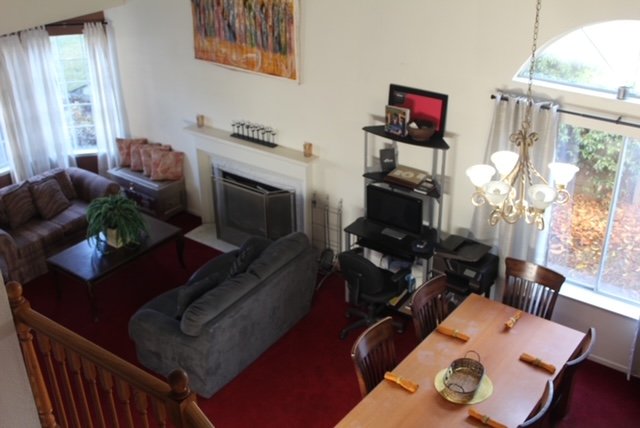
Our facilities include full kitchen and refrigerator access, high-speed Wi-Fi, beautiful gardens and outdoor spaces, a communal TV lounge, and a shared computer for resident use. Residents have access to grocery store and thrift store trips. The women’s house in Cordelia Fairfield has Fairfield Fast Connect door-to-door pickup for non-medical trips. The men’s house in Glen Cove Vallejo has nearby SolTrans bus access.
You have a real daily life inside our program. The structure around that life exists to protect it, not to diminish it.
For Families: What the Transition Process Means for You
If you are a family member reading this because someone you love is entering or considering Hazel’s Tranquility Place, the transition question matters to you too. You want to know that your loved one will not be stuck indefinitely and that when they do leave they will be genuinely prepared rather than simply discharged.
Here is what we want you to know.
Transition planning is collaborative and your loved one has a voice in it. The goal is always their genuine stability and independence, not a placement that continues longer than it needs to. At the same time, the transition readiness framework exists to protect your loved one from moving too quickly into independent living before the foundation is genuinely there.
Your involvement in the transition process where appropriate and with your loved one’s consent is welcomed. You may have important knowledge about housing options, family resources, or community connections that can support the transition plan. Bring that knowledge to the conversation.
For the full picture of what to expect throughout a loved one’s placement, our article on [anchor text: what families can expect when referring a loved one to Hazel’s Tranquility Place] covers every stage from placement through transition.
Call Now: 707-301-4051
What Comes After Hazel’s Tranquility Place
Leaving Hazel’s Tranquility Place is not the end of support. It is the beginning of a new chapter that our team and our broader network work hard to make genuinely sustainable.
Through Solano Impact Care, our housing sustainability program continues to support residents after they transition, covering budgeting, tenant rights, landlord mediation, and general life skills. The community support navigator on our team has personal experience navigating the local housing system, which means former residents are getting guidance from someone who genuinely understands the challenges they face.

Enhanced Care Management through Solano Impact Care is typically authorized for up to 12 months and continues regardless of whether you are still in residential placement. That means your clinical coordination does not stop when your residential stay ends.
For a complete picture of what independence looks like after supportive housing and how residents get there, our article on [anchor text: what does independence look like after supportive housing and how do residents get there] maps the full journey in practical terms.
Yes. You Will Be Able to Leave When You Are Ready. And We Will Help You Get There.
Entering a supportive housing program is not giving up your future. It is investing in it. The structure, the support, the planning, and the community at Hazel’s Tranquility Place all exist to move you toward something better, not to keep you in place.
When you are ready to leave, you will leave with a real plan, confirmed housing, connected supports, and the skills and resources to sustain the stability you have built. That is the promise behind everything we do.
If you have questions about what entering our program means for your path forward, reach out today. Our team will answer them honestly.
Call Now: 707-301-4051
Visit hazelstranquility.org or email care@solanoimpactcare.org to learn more or submit a referral today.