
When someone is considering a supportive housing program, privacy is one of the first concerns that comes up. And understandably so. Entering a residential program means sharing a home with other people, engaging with professional staff, and allowing an organization to coordinate your care. For someone who has already been through a hospitalization, a correctional system, or a period of crisis, the idea of giving up more privacy can feel genuinely threatening.
So let us address this directly. What does privacy actually look like inside a supportive housing program? What information is protected? Who can access it? What rights do residents have? And how does Hazel’s Tranquility Place specifically handle privacy in a way that respects the dignity of every person who walks through our doors?
These are fair questions. They deserve clear, honest answers. Because privacy is not just a legal compliance issue in supportive housing. It is a clinical one. People heal in environments where they feel safe. And feeling safe requires knowing that your personal information, your history, and your story are treated with care and discretion.
Call Now: 707-301-4051
What Privacy Means in a Residential Setting
Privacy in a supportive housing program means several distinct things and it helps to separate them clearly.
Personal information privacy
Your medical history, psychiatric history, substance use history, legal history, and other personal information shared during the referral and intake process is confidential. It is not shared with other residents. Additionally, it is not disclosed to family members without your consent. It is not discussed in common areas or in ways that could be overheard by people who are not directly involved in your care.
At Hazel’s Tranquility Place, our team handles all personal information shared during the intake and placement process in full accordance with HIPAA privacy regulations and applicable California privacy laws. We use the information you share with us to support your care only, and we never share it beyond the people directly responsible for providing that care.
Physical privacy
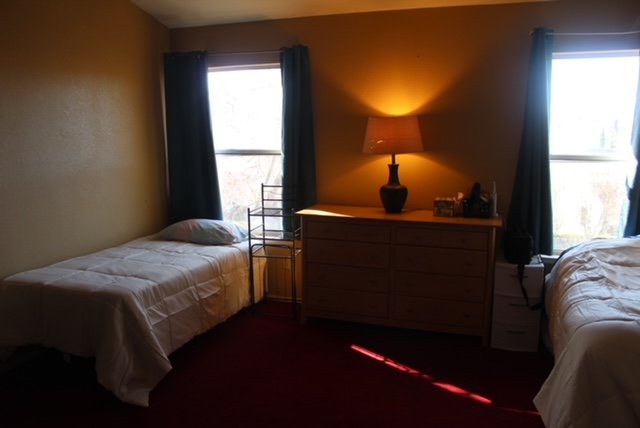
Living in a shared residential setting does not mean living without any physical privacy. At Hazel’s Tranquility Place, residents have their own bedroom space within shared facilities. Most rooms accommodate two residents, with a few larger master rooms accommodating three. Common areas are shared. Personal space is protected.
Furthermore, our facilities are designed with dignity in mind. No bunk beds. No garage or living room placements. Spacious bedrooms. Walk-in showers with handrails and grab bars. Full kitchen and refrigerator access. These are not incidental amenities. They reflect a fundamental commitment to residential dignity that privacy is part of.
Decisional privacy
Likewise, residents retain the right to make their own decisions about their care, their relationships, and their personal lives within the framework of house expectations. Nobody at Hazel’s Tranquility Place makes decisions about your care without your knowledge and participation. Your treatment plan, your goals, your transition plan, these are developed with you, not for you.
What Information Is Shared and With Whom
Understanding what information gets shared during a supportive housing placement helps residents and families know exactly what privacy actually looks like in practice.
Information shared within the care team
The professionals directly responsible for your care, including Hazel’s Tranquility Place staff and care coordinators throughnSolano Impact Care, share relevant clinical and care information with each other to coordinate your support effectively. This is not a privacy violation. It is how coordinated care works. And it is governed by strict professional standards about what is relevant to share and what is not.
Information shared with referring professionals
If a case manager, discharge planner, or probation officer referred you to our program, our team communicates with them about your progress and any significant developments during the placement. This communication is clinical in nature. It stays within the boundaries of what is relevant to your care and any supervision requirements.
Information shared with family members
Family members receive information about your placement only with your explicit consent. If you do not want your family to know specific details about your situation or your progress, you have the right to set those boundaries and our team will respect them. Our article on how families can work with case managers to support a loved one in supportive housing explains how family involvement works within the boundaries that each resident establishes.
Information never shared
Your personal history, diagnoses, and circumstances are never shared with other residents of the program. The people you live with do not have access to your file, your history, or your care plan. The peer community at Hazel’s Tranquility Place is built on shared experience, not shared information.
Submit a Referral Today at hazelstranquility.org
Your Rights as a Resident
Every resident of Hazel’s Tranquility Place has specific rights that our program is committed to upholding. Understanding these rights before you enter the program means you arrive with clarity rather than uncertainty about what you are stepping into.
The right to be treated with dignity
Your personal history does not define how you are treated inside our program. Staff engage with every resident as a full human being deserving of respect regardless of their background, their diagnosis, or the circumstances that brought them to supportive housing. This is not a policy statement. It is the operational standard that our founder Councilmember K. Patrice Williams built this program on from its founding in 2019.
The right to informed participation in your care
You have the right to know what your care plan involves, to participate in developing it, and to ask questions about any aspect of how your care is being managed. Nothing happens to your care plan without your knowledge. Our team explains the reasons behind every expectation, every service, and every recommendation rather than simply imposing them.
The right to privacy in your personal communications
Your personal communications including phone calls, texts, and emails are private. Staff do not monitor your personal communications or access your personal devices. You maintain full control over your personal relationships and your private communications throughout your placement.
The right to confidential health information
Your health information is handled in accordance with HIPAA and applicable California state privacy laws. You have the right to know who has access to your health information and for what purpose. You have the right to request corrections to your health records. And you have the right to know how your information is being used in the coordination of your care.
The right to file a concern or complaint
If you feel that your privacy rights have been violated or that you have been treated in a way that does not reflect our program’s standards, you have the right to raise that concern directly with program leadership without fear of retaliation. Our team takes these concerns seriously and responds to them through a documented process.
How Privacy and Community Life Coexist
One of the genuine tensions in any residential program is the relationship between individual privacy and community life. You are sharing a home with other people. You attend house meetings together. Also, you eat meals together. You live in close proximity to others who are navigating their own challenges.
This proximity does not mean that privacy disappears. It means that privacy operates differently in a community setting than it does in a fully independent living situation. And understanding that difference helps residents enter the program with realistic expectations.
Here is how privacy and community life coexist at Hazel’s Tranquility Place:
Your personal history stays private. What you share about yourself in community settings is entirely your choice. House meetings address shared expectations and community life, not individual histories or clinical details. Other residents do not have access to your file, your background, or your care plan.
Your personal space is respected. Common areas are shared. Bedrooms are not. Staff knock before entering. Personal belongings are treated with respect. And the culture of the residential community is built around mutual respect rather than the casual invasion of boundaries that poorly managed programs sometimes allow.
Your relationships outside the program are your own. You decide who knows you are in supportive housing. You decide what you share with family members, friends, and employers. Our team does not disclose your residential placement to anyone without your consent.
Our article on what is the difference between structure and control in supportive housing explains how the expectations that exist in our program serve your wellbeing rather than institutional authority, and privacy is a core part of that commitment.
Call Now: 707-301-4051
Why Privacy Matters Clinically, Not Just Legally
Privacy in supportive housing is sometimes discussed purely as a legal compliance matter. HIPAA. State regulations. Consent forms. These things matter. But the clinical case for privacy is just as important as the legal one.
People heal in environments where they feel safe. Safety requires trust. Trust requires knowing that what you share will be handled with discretion and care. When residents feel confident that their personal information is protected, they engage more openly with the clinical support available to them. They are more honest with their care team. They take more genuine risks in the therapeutic process. And they build the kind of trusting relationships with staff that produce real progress.
When privacy feels violated or uncertain, the opposite happens. People withdraw. They share less. They engage less authentically with the support they are supposed to be receiving. And the clinical work of stabilization becomes harder rather than easier.
At Hazel’s Tranquility Place, privacy protection is not simply about staying compliant with regulations. It is about creating the conditions in which genuine healing becomes possible. That is a clinical commitment, not just a legal one.
We Are Here for You And Your Privacy Is Safe With Us
If you are someone who needs supportive housing but has hesitated because of concerns about privacy, we want to speak to that hesitation directly.
Your story is yours. The details of what brought you to this point, your health history, your personal circumstances, your past, none of that will be treated casually or shared without purpose inside our program. Our team understands that the people who come to us have often already been through systems that did not always treat them with the discretion and dignity they deserved. We take that seriously.
At Hazel’s Tranquility Place, you are not a file or a case number. You are a person who needs a safe, structured, professionally supported environment to stabilize and move forward. And you deserve to do that work in an environment where your privacy is protected, your rights are respected, and your dignity is non-negotiable.
We serve adults in Solano County who are leaving hospitals, experiencing housing instability, rebuilding after incarceration, navigating recovery, or simply needing more structure than their current situation provides. If any of that sounds like your situation or the situation of someone you love, we want to hear from you.
Placement is free for qualifying members of Partnership HealthPlan of California and Kaiser Permanente. All placements are coordinated through our sister organization Solano Impact Care, whose team handles the intake process with the same commitment to privacy and dignity that governs everything we do.
Reach out today. Your privacy is safe with us.
Call Now: 707-301-4051
Visit hazelstranquility.org or email care@solanoimpactcare.org to learn more or start the conversation.