
Most conversations about helping vulnerable adults focus on housing. Find them a bed. Secure a placement. Get them off the streets or out of the hospital. And yes, housing matters enormously. Without a safe place to live, nothing else works. But here is the truth that experienced case managers, social workers, and families already know: housing alone is not enough.
People lose housing every day not because they could not find it, but because they were not prepared to keep it. They miss rent payments because no one helped them manage a budget. Also, they lose placements because unaddressed mental health needs escalated without support. They return to crisis because the daily structure they needed was never built. A roof without a plan is fragile. Stability requires both.
At Hazel’s Tranquility Place, we treat life and stability planning as a core part of what we do, not an optional add-on. Every resident who walks through our doors receives individualized support that goes far beyond housing placement.
This guide explains why life and stability planning in Solano County matters so much, what it looks like in practice, and how our program supports residents and the professionals who refer them.
Submit a Referral Today — hazelstranquility.org
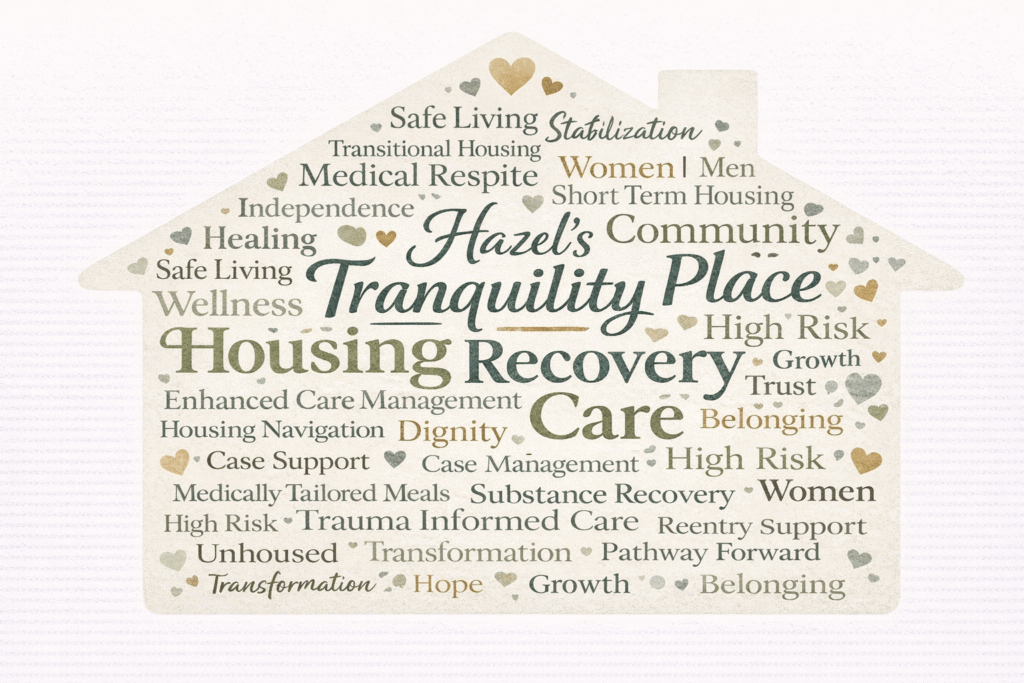
Why Housing Alone Is Never Enough
Securing a housing placement is a critical first step. However, for adults navigating recovery, reentry, mental illness, or extended homelessness, it is only the beginning. The challenges that led to housing instability in the first place do not disappear the moment someone gets a bed. Without intentional, structured support, those challenges follow people into their new living situation and eventually cause the same outcomes all over again.
Consider what actually drives housing instability and loss for vulnerable adults:
- Unmanaged mental health conditions that escalate without consistent treatment and support
- Substance use relapse triggered by stress, unstructured time, and environmental cues
- Financial instability caused by the absence of budgeting skills, benefits knowledge, or employment
- Social isolation that increases vulnerability to depression, poor decision-making, and crisis
- The absence of daily routine, which creates the kind of idle, directionless time that makes unhealthy coping mechanisms more likely
- Unresolved legal obligations that create ongoing barriers to housing, employment, and benefits access
- Lack of practical life skills that make independent living genuinely difficult to maintain
Each of these factors is addressable. Importantly, they are most effectively addressed while someone is in a supported residential setting, not after they have already lost housing again. That is exactly why life and stability planning in Solano County must happen during the transitional housing phase, not after it.
Submit a Referral Today — hazelstranquility.org
The Key Components of Life and Stability Planning
Effective life and stability planning in Solano County is not a single conversation or a checklist completed at intake. It is an ongoing, dynamic process built around five core components. Each one addresses a specific dimension of what individuals need to achieve and maintain stability.
1. Establishing Daily Routines
Routine is one of the most powerful and most underestimated tools in stability planning. For adults who have experienced extended periods of chaos, crisis, or institutionalization, a predictable daily structure provides something they may not have had in years: a framework that organizes time, reduces decision fatigue, and supports mental health.
Effective routine building includes:
- Consistent wake and sleep schedules that support physical and mental health
- Structured mealtimes that provide nutritional consistency and social connection
- Scheduled time for appointments, programming, job searching, and personal development
- Clear expectations around daily responsibilities such as household tasks and self-care
- Designated time for rest, recreation, and community participation
At Hazel’s Tranquility Place, daily routines are built into the residential experience from day one. Residents do not have to figure out structure on their own. Instead, they practice it daily within a supported environment until it becomes internalized habit.
2. Goal Setting and Progress Monitoring
Life and stability planning in Solano County requires clear, realistic, individually tailored goals. Vague aspirations do not drive progress. Specific, measurable goals do. Furthermore, goals need regular review and adjustment as circumstances change and residents make progress.
Effective goal setting in our program covers:
- Short-term goals addressing immediate stabilization needs such as medication consistency, appointment attendance, and house rule compliance
- Medium-term goals focused on skill building, benefits enrollment, and employment preparation
- Long-term goals centered on permanent housing, financial independence, and sustained recovery or mental health stability
- Regular progress check-ins between residents and staff to review goals, celebrate progress, and adjust plans where needed
Goal setting is a collaborative process at Hazel’s Tranquility Place. Staff do not impose goals on residents. Rather, they work alongside residents to identify what matters most to them and build a plan that reflects their specific priorities and strengths.
3. Practical Life Skills Development
Many adults entering transitional or supportive housing have significant gaps in practical life skills. These gaps are not character flaws. They are the predictable result of years spent managing crisis, illness, incarceration, or homelessness rather than learning the everyday skills that stable independent living requires. Addressing those gaps is a central part of life and stability planning in Solano County.
Life skills we actively develop in our program include:
- Budgeting, financial management, and understanding banking basics
- Cooking, nutrition, and meal planning on a limited budget
- Cleaning, home maintenance, and understanding tenancy responsibilities
- Communication and conflict resolution skills for home, workplace, and community settings
- Appointment management, including scheduling, transportation, and follow-through
- Navigating community resources such as food banks, health clinics, and social service agencies
- Job readiness skills including resume writing, interview preparation, and workplace behavior
Skill building happens through structured programming, one-on-one coaching, and daily practice within the residential environment. By the time residents transition out of our program, they carry these skills with them.
4. Benefits Enrollment and Financial Stability Planning
Financial instability is one of the most common and most preventable drivers of housing loss. Many adults who could access Medi-Cal, CalFresh, SSI/SSDI, or other benefits have not successfully enrolled because the process is complex and they have not had consistent support to navigate it. Consequently, life and stability planning in Solano County must include active support for benefits access and basic financial planning.
At Hazel’s Tranquility Place, our team assists residents with:
- Identifying which benefits they qualify for based on their specific circumstances
- Completing applications and gathering required documentation
- Navigating appeals processes where initial applications are denied
- Understanding how to manage benefits alongside earned income where applicable
- Building basic financial habits such as tracking expenses and saving for housing costs
Addressing financial stability during the residential phase means residents are not starting from zero when they transition to their next housing step.
5. Social Connection and Community Integration
Isolation is one of the most dangerous conditions for adults in recovery or stabilization. Building genuine social connection and community belonging is therefore not a luxury element of life and stability planning. It is essential. Residents who leave our program with a real social network are far more likely to maintain stability than those who transition in isolation.
Social connection building in our program includes:
- Peer community within the residential house itself
- Connection to community-based recovery support groups and peer programs
- Encouragement and support for civic and community participation
- Family relationship support and reintegration planning where appropriate
- Referrals to community organizations aligned with each resident’s interests and goals
Submit a Referral Today — hazelstranquility.org
How Hazel’s Tranquility Place Supports Life and Stability Planning
Life and stability planning in Solano County is most effective when it is built into the residential experience rather than offered as a separate external service. At Hazel’s Tranquility Place, we integrate life and stability planning into everything we do from the moment a resident arrives.
Here is how our program delivers on that commitment at each stage of the residential journey:
At Intake
The intake process at Hazel’s Tranquility Place goes beyond clinical history and demographics. From the very first conversation, our team works to understand each resident as a whole person. We identify their goals, strengths, barriers, and priorities. We assess their current skill levels, benefits status, clinical needs, and social supports. Then we use all of that information to build an individualized life and stability plan that will guide their entire time with us.
During the Placement
Life and stability planning in Solano County does not happen once and then sit on a shelf. Throughout the placement, our staff actively engage with each resident’s plan through:
- Regular individual check-ins to review progress and address barriers
- Structured group programming covering life skills, financial literacy, employment readiness, and wellness
- Active coordination with case managers, behavioral health providers, and other external supports
- Timely connection to community resources as needs arise and goals evolve
- Consistent documentation of resident progress that referring professionals can access
As Transition Approaches
Moving on from transitional or supportive housing is itself a critical transition that requires its own careful planning. Our team begins transition planning well before the projected move-out date. Specifically, we work to:
- Identify and secure appropriate next-step housing before the resident leaves our program
- Confirm that clinical and behavioral health supports will continue after discharge
- Connect residents to community supports that will maintain their social network post-transition
- Complete a thorough transition plan with the resident and their care team that maps the specific steps, contacts, and resources for the next chapter
Submit a Referral Today — hazelstranquility.org
Measuring Outcomes That Matter
For case managers and referring professionals, it is not enough to know that a program offers life and stability planning in Solano County. What matters is whether that planning actually translates into measurable outcomes for the individuals they serve.
At Hazel’s Tranquility Place, we focus on outcomes that reflect genuine stabilization and real progress toward independence. Specifically, we track and aim to demonstrate improvement in the following areas:
Housing Retention After Transition
The most fundamental measure of effective life and stability planning is whether residents successfully maintain stable housing after they leave our program. We track housing status at 30, 60, and 90 days post-transition and use that data to continuously improve our transition planning process.
Appointment Attendance and Treatment Engagement
Residents who consistently attend medical, psychiatric, and behavioral health appointments during their placement are far more likely to maintain those connections after transition. Therefore, we track appointment adherence as an indicator of both current stability and future success.
Benefits Enrollment Rates
We monitor the proportion of residents who successfully enroll in all benefits they qualify for during their placement. Benefits enrollment directly supports financial stability and housing retention after discharge.
Employment and Income Progress
For residents with employment as a goal, we track engagement with job readiness programming, applications submitted, interviews attended, and employment secured during the placement period.
Life Skills Assessment Progress
We conduct structured life skills assessments at intake and at regular intervals throughout the placement to measure concrete growth in the practical skills residents need for independent living.
Reduction in Crisis Events
Effective life and stability planning in Solano County should produce a measurable reduction in crisis events, emergency room visits, and psychiatric hospitalizations during and after the residential placement. We monitor these indicators closely.
Partnering With Hazel’s Tranquility Place for Client Success
For case managers, discharge planners, probation officers, and other professionals, the value of life and stability planning in Solano County depends entirely on having a residential partner who delivers on it consistently. Here is what partnering with Hazel’s Tranquility Place looks like in practice.
What we provide to referring professionals:
- Transparent communication about current program capacity and bed availability
- A clear, efficient referral process that respects your time and the urgency of your clients’ needs
- Active participation in care coordination meetings and case conferences
- Regular progress updates on shared clients throughout the placement
- Timely notification of any significant changes in a resident’s status or needs
- Written documentation of life and stability planning goals and progress available upon request
- Collaborative transition planning that keeps your team informed and involved
What we ask from referring professionals:
- Sharing relevant clinical and psychosocial history at the time of referral so we can build an effective plan from day one
- Maintaining active involvement in the resident’s care throughout the placement
- Participating in transition planning conversations as the end of placement approaches
- Providing honest feedback on our program so we can continue to improve
Life and stability planning in Solano County works best as a team effort. When residential programming and external case management work in genuine alignment, residents make faster progress and sustain better outcomes. That partnership is something we invest in deliberately and take seriously.
Submit a Referral Today — hazelstranquility.org

For Individuals and Families
If you are someone currently navigating instability or a family member supporting a loved one, understanding what life and stability planning in Solano County actually involves helps you ask the right questions and make informed decisions about care.
For individuals seeking support:
Life and stability planning is not about being told what to do. It is about having real support to figure out what you want your life to look like and then building the skills and connections to get there. At Hazel’s Tranquility Place, your goals drive the plan. Staff are there to support you, not to manage you.
Here is what you can expect if you join our program:
- A genuine conversation at intake about your goals, strengths, and what matters most to you
- A personalized plan built around your specific situation, not a generic template
- Consistent, respectful staff support throughout your time with us
- Real skill building that prepares you for independence, not just compliance
- Active help with benefits, employment, and next-step housing planning
- A peer community of people navigating similar journeys who understand yours
For families:
Watching a loved one struggle with instability is painful. Knowing that they are in a program that takes life and stability planning seriously — rather than just providing a temporary bed — makes a real difference. At Hazel’s Tranquility Place, family involvement is welcomed where appropriate and with resident consent. We keep families informed, answer questions honestly, and work collaboratively toward outcomes that benefit everyone.
Submit a Referral Today — hazelstranquility.org
Frequently Asked Questions
Q: What is life and stability planning in Solano County, and how is it different from standard case management?
Life and stability planning in Solano County is a comprehensive, individualized process that addresses not just housing placement but the full range of skills, routines, goals, and connections a person needs to maintain stability long term, making it more holistic and forward-looking than standard case management, which often focuses primarily on immediate service coordination.
Q: How does Hazel’s Tranquility Place personalize life and stability planning for each resident?
Our team conducts a thorough individualized assessment at intake covering goals, strengths, clinical needs, skill levels, and life circumstances, then builds a tailored plan that evolves through regular check-ins and progress reviews throughout the entire placement.
Q: Can referring professionals stay involved in a client’s life and stability planning after placement?
Absolutely — we actively encourage referring professionals to participate in care coordination, case conferences, and transition planning throughout the placement because collaborative involvement produces significantly better outcomes for residents.
Q: How long does the life and stability planning process take?
Life and stability planning in Solano County is an ongoing process that runs for the entire duration of a resident’s placement rather than a one-time event, because building genuine stability takes consistent, sustained effort over time.
Q: Does Hazel’s Tranquility Place provide life and stability planning support for residents after they transition out of the program?
Our team works to ensure that every resident transitions with a clear, detailed plan and active connections to ongoing supports in the community, so that the work begun during the residential placement continues to benefit them well beyond their time with us.
Stability Is Built, Not Found
Stable, independent living does not happen by accident. It happens because someone helped a person build the routines, skills, connections, and plans that make it possible. Life and stability planning in Solano County is that building process. It is what turns a temporary housing placement into a genuine turning point.
At Hazel’s Tranquility Place, every resident receives life and stability planning as a core part of their residential experience. Case managers, families, and individuals can trust that a referral to our program means more than a bed. It means a real investment in long-term success.
If you are ready to refer a client, support a loved one, or take the next step yourself, reach out today.
Submit a Referral Today — hazelstranquility.org