
Life transitions are hard under the best circumstances. Losing stable housing, leaving a treatment program, recovering from a hospitalization, or navigating reentry after incarceration all place enormous pressure on a person’s mental, emotional, and physical resources. During these moments, most people need more than just a roof over their heads. They need an environment that actively supports their ability to function, heal, and move forward.
Unfortunately, the options available to adults in transition are often limited to emergency shelters or unsupported independent living arrangements. Neither option gives people what they actually need. Shelters are temporary, crowded, and offer little structure. Unassisted independent living places all the responsibility on an individual who may not yet have the tools to manage it safely.
At Hazel’s Tranquility Place, we have built exactly that kind of environment across our Vallejo and Fairfield homes. This guide explains what structured housing is, why it works, and how to access it for yourself, a loved one, or a client in need.
Contact Us for Placement — hazelstranquility.org
What Is Structured Housing and How Is It Different From a Shelter?
Many people use the terms “shelter,” “transitional housing,” and “structured housing” interchangeably. However, these options are fundamentally different in what they offer and what outcomes they produce.
Understanding those differences is essential for care teams, families, and individuals trying to identify the right level of support.
Here is a clear comparison:
Emergency Shelters:
- Provide short-term, temporary accommodation — typically nights only
- Offer little to no structured programming or daily routine
- House large numbers of people with varying and often complex needs
- Provide minimal professional oversight or individualized support
- Focus on immediate safety rather than medium or long-term stabilization
- Rarely connect residents to the clinical or social services they need
Structured Housing for Adults in Solano County:
- Provides medium to long-term residential placement with clear program expectations
- Organizes daily life around structured routines including meals, programming, and appointments
- Serves a defined population with a consistent, intentional support model
- Employs trained staff who provide daily oversight, support, and accountability
- Connects residents to clinical care, life skills programming, and transition planning
- Focuses equally on stabilization today and independence tomorrow
The distinction matters enormously in practice. Shelters serve a critical emergency function, but they are not designed to produce lasting change. Structured housing for adults in Solano County is designed specifically to do that — to take someone from a point of crisis and walk alongside them toward real stability.
The Psychological Benefits of Routine and Accountability
One of the most important things structured housing provides is something that sounds simple but is profoundly therapeutic: predictability. For adults who have experienced trauma, housing instability, mental illness, or addiction, an unpredictable environment is not just uncomfortable. It is actively harmful.
Consider why routine and accountability matter so deeply during vulnerable life transitions:
1. Routine reduces anxiety
When a person knows what to expect from their day, their nervous system can regulate more effectively. Predictable mealtimes, wake times, and scheduled activities reduce the constant low-level stress of uncertainty. Over time, that reduction in stress creates space for genuine healing and growth.
2. Structure supports mental health
Research consistently links daily routine to better mental health outcomes. Specifically, structure helps regulate sleep, mood, appetite, and energy levels — all of which are commonly disrupted during periods of crisis and transition. Therefore, building routine into residential life is not an administrative preference. It is a clinical intervention.
3. Accountability builds self-efficacy
When adults in transition meet expectations consistently — showing up to meals, attending programming, keeping their space clean, respecting curfew — they experience the direct positive feedback of their own reliability. Gradually, that experience builds genuine confidence and self-efficacy that extends far beyond the residential setting.
4. Community creates belonging
Living alongside others who are navigating similar challenges reduces the shame and isolation that often accompany vulnerable life transitions. Consequently, residents in structured environments frequently report that peer connection is one of the most meaningful parts of the experience.
5. Accountability prevents drift
Without external structure, adults in transition are vulnerable to what researchers call “drift” — the gradual disengagement from recovery goals, treatment plans, and forward momentum that happens when there is nothing organizing and reinforcing daily effort. Structured housing for adults in Solano County prevents that drift by keeping residents engaged, accountable, and purposeful every day.
6. Structure prepares residents for independence
Perhaps most importantly, the habits built inside a structured residential program are the same habits needed for successful independent living. Residents are not just surviving their placement. They are actively building the foundation of the life they are transitioning toward.
Contact Us for Placement — hazelstranquility.org

How Hazel’s Tranquility Place Implements Structured Living
Hazel’s Tranquility Place operates structured housing for adults in Solano County across two locations: a women’s home in Vallejo and a men’s home in Fairfield. Both programs share the same model and standards, with gender-specific programming tailored to the experiences and needs of each resident community.
Here is exactly how we implement structured living across both homes:
1. Clear House Expectations from Day One
Every resident receives a full orientation to house rules, expectations, and program requirements on the day they arrive. Transparency matters. When residents understand what is expected of them and why, they are far more likely to engage with the program genuinely rather than simply comply on the surface.
2. Structured Daily Schedule
Our daily schedule includes consistent mealtimes, house meetings, programming sessions, personal development time, and curfew. Importantly, the schedule is firm but not rigid — it provides the structure residents need while leaving room for individual appointments, employment, and other responsibilities.
3. On-Site Staff Support
Trained staff are present throughout the day to provide support, guidance, and accountability. Our staff do not simply monitor residents. They engage with them, check in on their goals, and respond to challenges as they arise. Additionally, staff maintain detailed documentation of each resident’s progress to support care coordination with external providers.
4. Active Care Coordination
We maintain direct communication with each resident’s care team — including case managers, therapists, psychiatrists, and benefits workers. Furthermore, we participate in care planning meetings, provide progress updates, and respond promptly to any changes in a resident’s clinical needs. The residential setting and the clinical care plan work together, not in parallel.
5. Transition Planning
Structured housing for adults in Solano County at Hazel’s Tranquility Place is a stabilization step, not a permanent arrangement. Therefore, we begin transition planning early in every resident’s placement — identifying next steps for housing, employment, benefits, and clinical support so that the move toward independence is planned and supported rather than abrupt.
Contact Us for Placement — hazelstranquility.org
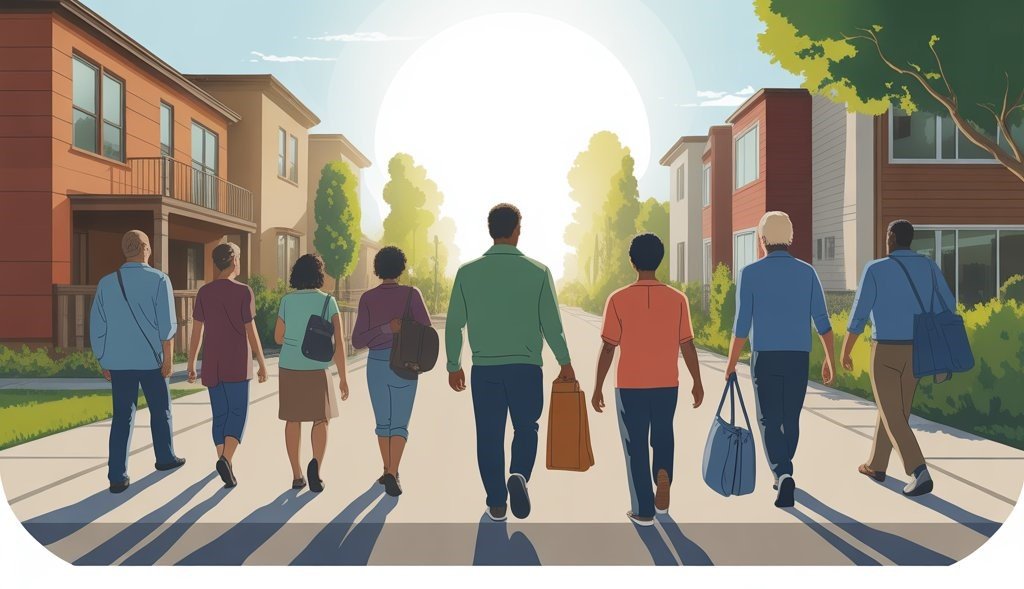
Who Benefits Most From Structured Housing for Adults in Solano County?
Structured housing serves a specific population — adults who need more than emergency shelter but less than inpatient or locked-facility care. Identifying the right candidates is important for care teams and families trying to match individuals with the appropriate level of support.
Adults who typically benefit most from structured housing in Solano County include those who:
- Are transitioning out of a hospital, psychiatric facility, residential treatment program, or correctional setting
- Lack a safe, stable home environment to return to after a period of crisis or treatment
- Are managing serious mental illness, a co-occurring disorder, or a behavioral health condition that requires daily support
- Have a history of relapse or decompensation linked to returning to unsupported or triggering environments
- Need consistent medication management support and clinical follow-through
- Are motivated to engage with programming and work toward greater independence
- Are adults 18 and older who are medically stable and ready for a community residential setting
Equally important is identifying who may need a higher or different level of care. Adults who require inpatient psychiatric care, active medical supervision, or secure placement are not appropriate candidates for our program. However, we will always have an honest conversation about fit and help connect individuals or families to a more appropriate option when needed.
What Families Need to Know
Families often carry the heaviest burden during a loved one’s vulnerable transition. Many family members want desperately to help but recognize that bringing a loved one home is not always the safest or most effective option. Structured housing for adults in Solano County offers a genuine alternative — one that provides professional support without removing family from the picture entirely.
Here is what families can expect when a loved one enters Hazel’s Tranquility Place:
- Clear communication from our team about what the program provides and what it does not
- Family involvement in care planning where appropriate and with the resident’s consent
- Regular updates so families are not left wondering how their loved one is doing
- A professional team that engages the resident with dignity and genuine care
- Active transition planning so the placement has a clear path forward
- Honest conversations if circumstances change and a different level of care becomes necessary
Choosing structured housing for a family member is not giving up. It is choosing the level of structured, professional support that gives them the strongest possible foundation for lasting change.
Contact Us for Placement — hazelstranquility.org
How to Refer an Adult in Need — Step by Step
Whether you are a care team professional or a family member, the referral process at Hazel’s Tranquility Place is designed to be clear, fast, and straightforward.
Follow these steps to get started:
Step 1 — Reach out early
Contact us as soon as you identify that someone may need structured housing for adults in Solano County. Early contact gives our team time to review the case thoroughly and prepare for a smooth transition. Visit hazelstranquility.org or call us directly to begin.
Step 2 — Prepare key information
When you contact us, have the following ready:
- Full name, date of birth, and current location of the individual
- Primary diagnoses — psychiatric, medical, and substance use history if applicable
- Current medications and prescribing providers
- Functional assessment — level of daily living support required
- Current living situation and reason for seeking structured housing
- Any safety considerations relevant to a community residential setting
- Funding source — Medi-Cal, SSI/SSDI, private pay, or county funding
- Contact information for the referring case manager, clinician, or family member
Step 3 — Intake review
Our team reviews all referral information and responds with a clear determination — typically within one business day. We will confirm fit, ask any follow-up questions, and outline next steps.
Step 4 — Placement confirmation
Once we confirm a placement, we coordinate directly with the referring party to plan the transition. This includes move-in logistics, orientation to house expectations, and introduction to the resident’s assigned staff contact.
Step 5 — Ongoing coordination
After admission, referring professionals receive a named contact at Hazel’s Tranquility Place for ongoing communication throughout the placement. Families receive regular updates in accordance with the resident’s preferences and consent.
Contact Us for Placement — hazelstranquility.org
Frequently Asked Questions
Q: What is the difference between structured housing for adults in Solano County and a sober living home?
Structured housing for adults in Solano County provides a broader level of support than a typical sober living home, including on-site trained staff, active care coordination with clinical providers, individualized life planning, and structured daily programming — making it appropriate for adults with complex needs beyond substance use recovery alone.
Q: How long do residents typically stay at Hazel’s Tranquility Place?
Length of stay depends on each resident’s individual progress, goals, and transition readiness, as our team works collaboratively with residents and their care partners to determine when a move toward more independent living is appropriate and well-supported.
Q: Do you accept residents with co-occurring mental health and substance use conditions?
Yes, our program actively supports adults managing co-occurring conditions because our trained staff and coordinated care model are specifically designed to address the layered needs that these individuals bring to a residential setting.
Q: What funding sources does Hazel’s Tranquility Place accept?
We accept Medi-Cal, SSI/SSDI, county-funded program dollars, and private pay arrangements, and our team works with referring professionals and families to identify applicable funding options during the referral process.
Q: Can individuals self-refer to your structured housing program?
Yes, individuals seeking structured housing for adults in Solano County can contact us directly, and our team will walk them through the intake process honestly — including whether our program is the right fit for their specific situation and needs.
The Right Environment Changes Everything
Structured housing for adults in Solano County is not a last resort. It is a deliberate, evidence-informed intervention that gives vulnerable adults the environment they need to stabilize, grow, and build toward independence.
At Hazel’s Tranquility Place, founder K Patrice Williams built a program that takes this responsibility seriously — across our women’s home in Vallejo and men’s home in Fairfield. Every element of how we operate reflects a commitment to genuine dignity, real accountability, and practical life planning.
If you are a care team professional with a client who needs structured residential support, a family member searching for a safe and supportive option, or an individual ready to take the next step toward stability, we are here to help.
Reach out today and find out whether our program is the right fit.
Contact Us for Placement — hazelstranquility.org